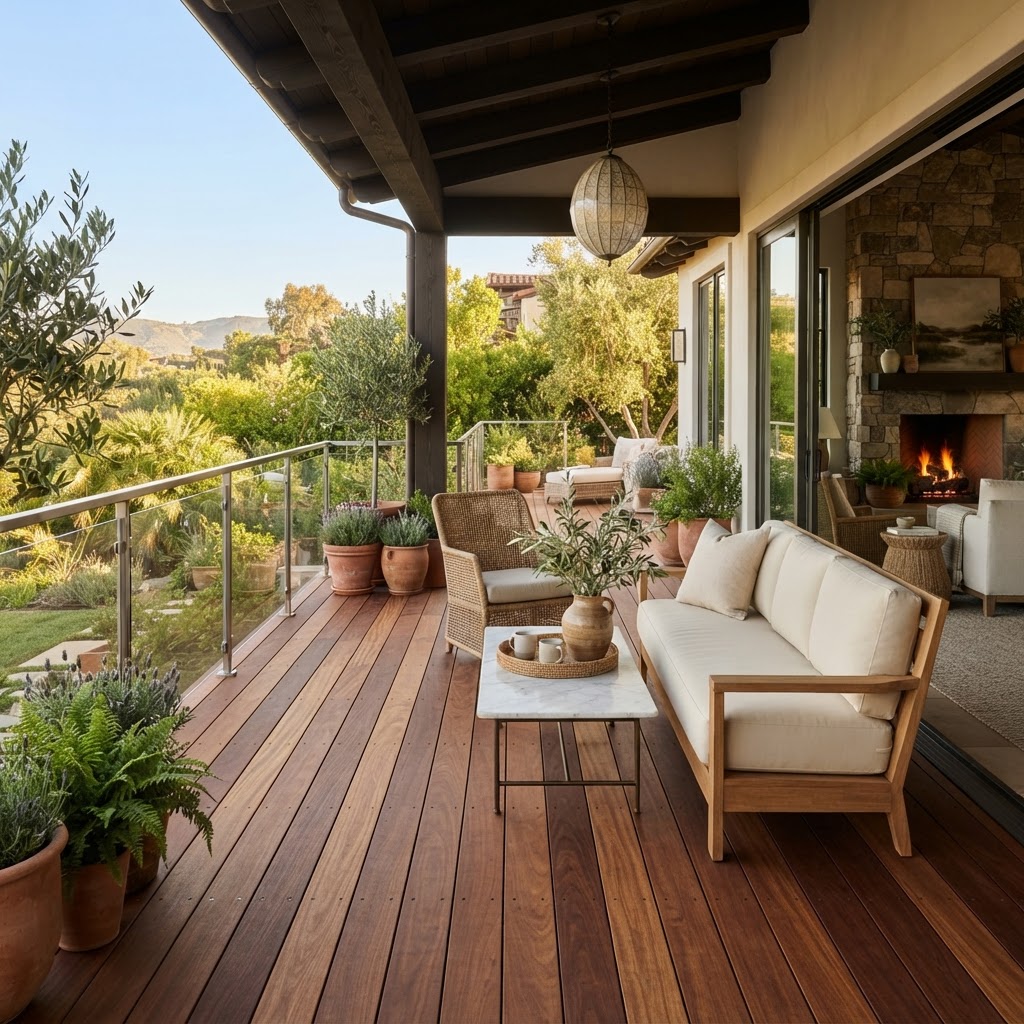
Best Decking Materials for Your Climate
Climate matters more than most homeowners realize. Compare wood, composite, and PVC decking by heat, moisture, snow, cost, and maintenance.
Best Decking Materials for Your Climate
Choosing the best decking materials isn't just about color, grain, or the price tag on a sample board. A deck that looks perfect in a showroom can get painfully hot in Arizona, stay damp for weeks in the Southeast, or start checking and splitting after a few rough winters in the Midwest. I've seen homeowners spend $25,000 on a new deck and wish they'd picked a different material before the second summer.
Climate needs to be one of your first filters, right alongside budget and appearance. If you're comparing composite vs wood decking, think beyond curb appeal: sun exposure, humidity, salt air, snow load, and how much maintenance you'll honestly keep up with. A smart choice now can save you years of staining, repairs, and frustration.
If you're mapping out a bigger backyard project, this article works well alongside Bari Decor's Outdoor Living Spaces: Complete Homeowner Guide, which covers layout, function, and long-term planning for the full exterior space.
Key Takeaways
- Climate affects deck performance as much as budget does.
- Composite and PVC usually win in wet, humid, and coastal areas because they resist moisture better than most wood species.
- In hot, sunny regions, board color matters almost as much as material; dark decking can become uncomfortable fast.
- Pressure-treated wood costs less up front, but maintenance can add up over 10 years.
- Cold climates need decking that can handle movement, freeze-thaw cycles, and snow removal without cracking or warping.
- The best deck is one that fits your weather, your maintenance habits, and the quality of the installer.
Why climate should drive your decking choice
Homeowners often start with style boards and stain colors. I get it. The visual side is exciting. But on real job sites, the first questions I ask are about orientation, drainage, tree cover, and local weather. A south-facing deck in full sun behaves very differently from a shaded deck tucked under mature oaks. A waterfront home needs a different strategy than a suburban backyard with decent air flow.
Climate also affects the structure below the deck, not just the surface boards. Humid conditions can shorten the life of framing if ventilation is poor. Freeze-thaw cycles can loosen fasteners and stress joints. Salt air can corrode hardware if the wrong metal is used. That's why material choice should be tied to installation details, not handled as a separate decision.
If you're still deciding whether a raised platform is the right outdoor feature, compare function and resale impact in Deck vs Patio: What Adds More Value?. That decision often comes before you narrow down material options.
Best decking materials at a glance
The best decking materials vary by region, but this table gives a solid starting point.
| Material | Typical installed cost | Best fit climates | Main strengths | Watch-outs | Maintenance |
|---|---|---|---|---|---|
| Pressure-treated wood | $18-$32 per sq. ft. | Mild to moderate climates | Lowest upfront cost, easy to repair | Can warp, crack, and need frequent sealing | High |
| Cedar or redwood | $28-$45 per sq. ft. | Drier climates | Natural beauty, cooler underfoot than many composites | Softer wood, can weather unevenly | Medium to high |
| Tropical hardwoods like Ipe | $45-$75 per sq. ft. | Hot, dry, or mixed climates | Extremely dense, long-lasting, rich appearance | Expensive, heavy, labor-intensive install | Medium |
| Capped composite | $35-$60 per sq. ft. | Most climates, especially humid areas | Low maintenance, resists rot and insects | Can get hot, quality varies by brand | Low |
| PVC decking | $40-$65 per sq. ft. | Wet, coastal, poolside climates | Excellent moisture resistance, very low upkeep | Can feel less natural, some lines expand more | Low |
The big composite vs wood decking debate usually comes down to time, not just money. Wood costs less on day one, but it asks for recurring care: washing, sealing, staining, spot repairs, and the occasional board replacement. Composite costs more up front, yet many families choose it because they don't want to give up a weekend every year to maintain the deck.
Site-tested rule: If you know you won't sand and stain every 1 to 3 years, don't choose a material that depends on it for survival.
Best decking materials for hot, sunny climates
In desert and high-sun regions, heat retention is the issue that catches people off guard. Dark charcoal composite may look sharp on a sample, but in full July sun it can become uncomfortable to walk on barefoot. I've had clients in Texas and Arizona switch from dark boards to light taupe or weathered oak tones after standing on samples outside for 15 minutes.
For these climates, light-colored capped composite, certain PVC lines, and dense hardwoods can all work well. The key is color, board technology, and exposure. Some premium composite brands now offer heat-reflective technology, which helps, though none of them stay as cool as shade. Cedar also performs decently in dry heat, but you'll need to accept more upkeep and some weathering.
Shade design matters just as much as decking selection. A pergola, retractable awning, or roof extension can dramatically improve comfort. If you're trying to make the deck usable beyond one season, Bari Decor's Covered Patio Ideas for Year-Round Use has practical ideas that apply to decks too.
Surface texture deserves attention here as well. Deep embossing and varied grain patterns can make boards feel slightly better underfoot and improve traction, but they also collect more dust in dry climates. On projects with outdoor kitchens connected to the house, I often coordinate deck tones with interior finishes so the transition feels intentional. If that deck is part of a larger remodel off the back of the home, see the Complete Guide to Whole Home Renovations for sequencing and planning.
Best decking materials for wet, humid, and coastal climates
Moisture is relentless. In the Southeast, Pacific Northwest, and coastal areas, decks stay wet longer, grow mildew faster, and put more stress on anything absorbent. This is where capped composite and PVC usually pull ahead. They resist rot better than wood, need less refinishing, and hold up well around splash zones, planters, and heavy rain.
PVC is often my first recommendation for homes near pools, marshes, or the ocean. It doesn't absorb water the way wood does, and it stands up well to humidity. Good capped composite is a close second, especially if you want a more convincing wood look. Just make sure the installer follows spacing requirements exactly. In humid climates, board movement is real, and sloppy gapping looks worse over time.
Wood can still work, but species selection and maintenance become critical. Pressure-treated pine is common because it's affordable, yet it needs regular sealing and close inspection. Cedar performs better than basic pine in many cases, but it still isn't carefree. Tropical hardwoods can do very well if you budget for the material and proper fastening system.
Don't ignore the hardware. Coastal air chews through the wrong fasteners. Stainless steel screws, corrosion-resistant connectors, and good ventilation under the deck are not upgrades; they're basics. If you're building from scratch, pair material selection with local code review using Do You Need a Permit for a Deck?.
Best decking materials for cold, snowy, and freeze-thaw climates
Snow country asks a lot from a deck. Boards expand and contract, moisture gets into small cracks, and repeated freeze-thaw cycles expose weak products and weak installation fast. In these regions, I like high-quality capped composite, PVC rated for cold-weather performance, or dense hardwoods installed by a crew that understands winter movement.
Pressure-treated wood can absolutely be used in colder climates, especially for budget-conscious projects, but expect more surface checking and a shorter cosmetic lifespan if maintenance slips. Snow sits. Ice forms. Shovels scrape. Wood takes a beating. Composite tends to keep its appearance longer, though cheap products can look tired fast if they're poorly supported or installed too tight.
Traction matters more than homeowners think. Smooth boards may look sleek, but lightly textured finishes are safer in wet boots and slushy conditions. Avoid metal shovels if possible, and never assume all composites behave the same in winter. Manufacturer specs, span ratings, and warranty details matter.
A lot of cold-climate decks are also rear-entry spaces from the kitchen or mudroom. If you're remodeling that connection point at the same time, the Ultimate Guide to Kitchen Remodeling can help you think through traffic flow, doors, lighting, and storage so the indoor-outdoor transition works year-round.
Budget, lifespan, and maintenance expectations
The cheapest board is rarely the cheapest deck over time. This is where homeowners need an honest look at ownership costs, not just installation quotes.
| Material | Typical lifespan | Yearly upkeep | 10-year maintenance cost estimate |
|---|---|---|---|
| Pressure-treated wood | 10-20 years | Wash, stain or seal every 1-2 years | $2,000-$6,000 |
| Cedar/redwood | 15-20 years | Clean and refinish every 1-3 years | $2,500-$6,500 |
| Tropical hardwood | 25-40 years | Clean and oil as desired | $2,000-$5,000 |
| Capped composite | 25-30 years | Basic cleaning | $500-$1,500 |
| PVC | 25-30+ years | Basic cleaning | $500-$1,200 |
Those numbers vary by deck size, local labor rates, and product line, but the pattern is consistent. Wood saves money up front and asks more from you later. Composite and PVC demand a bigger initial check, then stay simpler to own. That's why the best decking materials for busy households often aren't the cheapest ones.
Timing matters too. A straightforward 300-square-foot deck may take 1 to 3 weeks to build once permits are approved and materials are on site. Add custom stairs, lighting, skirting, or a roof structure, and the timeline stretches. Before construction starts, it helps to review How to Hire a Deck or Patio Contractor, browse experienced pros at /professionals, and request pricing through /get-quotes.
If style coordination matters as much as performance, especially on luxury projects, pairing your contractor with a design pro can make a huge difference. Bari Decor's How to Hire an Interior Designer: A Complete Guide for Homeowners is useful if you want the deck to feel connected to the architecture, furnishings, and finishes inside the home. Once the build is done, finish the space with planters, lighting, rugs, and outdoor accents from the Bari Decor store.
Summary
- Match decking material to climate first, then compare color, cost, and appearance.
- Hot regions benefit from lighter colors and shade planning; wet regions usually favor capped composite or PVC.
- Cold climates need strong installation details and materials that handle movement and snow well.
- Pressure-treated wood is budget-friendly, but long-term upkeep is real.
- The best result comes from good material choice and a contractor who installs it correctly.
Frequently Asked Questions
Written by
Bari Decor
Bari Decor — Industry Insights
Need a Professional for Your Project?
Get matched with verified home design professionals in your area.
Get Free Quotes