Stamped Concrete vs Pavers
Stamped concrete and pavers can both make a great patio, but their cost, repairability, and long-term performance are very different.
Stamped Concrete vs Pavers
If you're comparing stamped concrete vs pavers for a new patio, you're asking the right question early. Both can look beautiful on day one. The difference shows up a few seasons later, after furniture has scraped the surface, water has found the low spots, and the ground has moved through heat, rain, and winter freeze.
I’ve specified and walked both of these patio materials on real projects for years, and neither is the automatic winner. The better choice depends on your budget, climate, design goals, and how much maintenance you’re willing to live with. If you're still planning the bigger picture of layout, drainage, and sizing, start with this patio design and installation guide.
Key Takeaways
- Stamped concrete usually costs less upfront than pavers, especially on simple patio layouts.
- Pavers are easier to repair if sections settle, stain, or crack over time.
- Stamped concrete gives you a continuous slab look, while pavers offer more texture, borders, and pattern options.
- Climate matters a lot. In freeze-thaw regions or areas with shifting soil, pavers often age more gracefully.
- Long-term value isn't just about installation price. Maintenance, drainage, and repair access can change the math.
Stamped Concrete vs Pavers: How they're built
The biggest difference between stamped concrete and pavers is structural. Stamped concrete is one continuous slab poured in place, then textured and colored to mimic stone, slate, brick, or even wood plank. It relies on a properly prepared sub-base, reinforcement, control joints, and good finishing. If the slab moves, the whole surface tells the story.
Pavers are individual units, usually concrete, clay brick, or natural stone, installed over a compacted gravel base with bedding sand or stone dust depending on the system. The surface is made of many pieces rather than one slab. That sounds like a small detail, but on a job site it changes everything about drainage, movement, and repair.
Here’s the side-by-side view I give clients:
| Feature | Stamped concrete | Pavers |
|---|---|---|
| Basic construction | One poured slab | Individual units over compacted base |
| Typical patio thickness | 4 inches, sometimes thicker at edges or load areas | 2 3/8 to 3 1/8 inch pavers over base |
| Surface look | Continuous, jointed slab | Modular pattern with joints |
| Drainage behavior | Depends on slab slope and control joints | Water can move through joints and base system |
| Repair method | Patch, overlay, or replace sections | Lift and reset or replace affected pieces |
| Best fit | Lower upfront cost, sleek slab appearance | Higher-end flexibility, better repairability |
This is why base prep matters so much. A beautiful finish on either system won’t save a patio built on poor compaction. If you're choosing materials for both the front and back of the house, front walkway materials compared is a useful companion piece.
Appearance, texture, and design flexibility
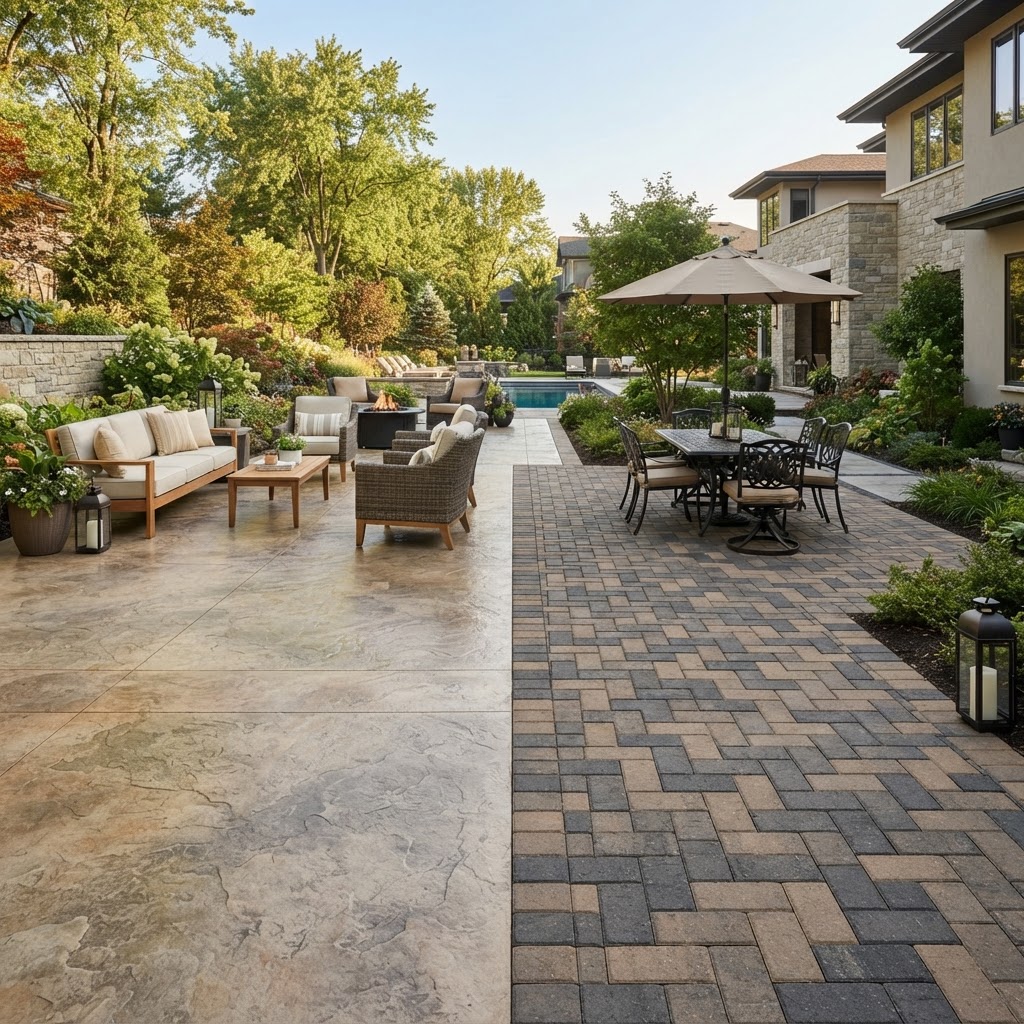
Stamped concrete can be surprisingly attractive. Done well, it can mimic ashlar slate, random stone, cobblestone, or board-formed wood patterns at a lower cost than the real material. It also gives you a cleaner, broader visual field, which works well on modern homes, mid-century updates, and patios where you want the furniture to take center stage.
Pavers give you more design control. You can mix sizes, use contrasting borders, create inlays, shift directions, and combine materials like concrete field pavers with clay brick edging. On higher-end homes, that layered detail usually reads richer and more intentional than stamped concrete, especially up close.
If you already know your patio will include overhead shade or a structure, plan the surface with that in mind. These pergola ideas for shade and style can help you see how hardscape and structure should work together instead of being chosen separately. If you're building around a grill, sink, or prep zone, this guide to outdoor kitchen patio layout ideas is worth reviewing before the patio is installed.
A practical note from the design side: bold stamp patterns and heavy color release can look busy fast. Pavers tend to age better visually because variation is built into the product. Once the hardscape is done, you can soften it with planters, lighting, and outdoor accessories from the Bari Decor store.
Durability in real-world weather and daily use
Durability is where many homeowners start leaning one way or the other. A well-installed stamped concrete patio is strong, but concrete cracks. That doesn’t always mean failure. Hairline cracking is common and expected. The real issue is whether those cracks stay controlled and relatively subtle or widen, shift, and draw the eye.
Pavers don’t crack as a single field because there is no single field to crack. They can settle, spread, or heave if the base is poor or drainage is wrong, but those problems are usually localized. On projects in cold climates, that matters. Freeze-thaw cycles, expansive clay soils, and root movement are much easier to address with pavers than with a decorative slab.
Job-site rule of thumb: if I expect movement from soil, water, or weather, I like systems that can be taken apart and corrected. Pavers give you that option. Stamped concrete usually asks you to disguise or live with the damage.
Heavy furniture, wheeled grills, and dropped tools also affect the two surfaces differently. Stamped concrete can chip at edges and along joints. Pavers can scuff too, but replacing one stained or damaged unit is far easier than patching decorative concrete so the repair disappears.
Maintenance and repair reality
Stamped concrete needs regular sealing if you want to preserve color and reduce surface wear. In most climates, expect resealing every 2 to 3 years, sometimes sooner in strong sun or around pools. If the sealer fails, the surface can fade unevenly, and decorative concrete patches rarely blend perfectly.
Pavers also benefit from sealing, but they don’t always require it. Many homeowners leave concrete or clay pavers unsealed and simply clean them as needed. The main maintenance issue is joint material. Polymeric sand helps reduce weeds and ants, but it can still erode over time and may need refreshing.
Repair is where the difference becomes very real. If a stamped concrete patio develops a visible crack through the center of a dining area, you may be looking at patching, resurfacing, or replacing an entire section. If a few pavers stain from grease near the grill, a contractor can lift and replace those units without rebuilding the whole patio.
That’s one reason pavers appeal to homeowners trying to simplify exterior upkeep. Pairing a durable patio with low-maintenance front yard landscaping ideas can cut a lot of weekend labor across the whole property.
Stamped Concrete vs Pavers: Upfront cost and long-term value
In most markets, stamped concrete wins on initial price. A standard stamped concrete patio often lands around $12 to $22 per square foot installed, depending on excavation, reinforcement, color system, pattern complexity, access, and regional labor rates. Premium decorative work can run higher.
Concrete pavers usually start around $18 to $35 per square foot installed, with premium products, intricate patterns, border work, and difficult sites pushing that figure into the $30 to $45 range. If you want a deeper look at paver pricing by size and scope, this paver patio cost guide breaks it down in more detail.
Here’s a simple cost comparison for a 400-square-foot patio:
| Cost item | Stamped concrete | Pavers |
|---|---|---|
| Typical installed cost per sq. ft. | $12-$22 | $18-$35 |
| Estimated total for 400 sq. ft. | $4,800-$8,800 | $7,200-$14,000 |
| Sealing and upkeep over time | Moderate, usually every 2-3 years | Low to moderate, depending on finish |
| Typical repair cost | $300-$1,500+ and may remain visible | $200-$800 for localized lift/reset or replacement |
| Long-term value note | Lower entry cost | Higher repair flexibility |
The cheapest bid is not always the best deal. A stamped patio with weak base prep can become expensive fast if it cracks badly or drains toward the house. A paver patio with a proper base may cost more today but give you cleaner repairs ten years from now. For local numbers from qualified installers, request patio quotes from Bari Decor.
Installation timeline, drainage, and permit questions
Stamped concrete is often faster to install on straightforward layouts. A typical patio may take 3 to 5 working days for excavation, base prep, forms, pour, stamping, and cleanup, but it still needs curing time. I usually tell homeowners to wait about 7 days before heavy furniture and longer before placing very heavy planters or kitchen components.
Pavers often take 4 to 7 working days on a similar-sized patio, sometimes more for curves, borders, steps, or integrated lighting. The upside is that once the base and surface are compacted and completed, the patio is generally ready for use much sooner than fresh concrete.
Drainage is not optional with either material. The patio should slope away from the house, and any low area near a foundation, basement wall, or door threshold needs careful planning. That’s covered in more detail in the patio design and installation guide. If your patio also includes gas, plumbing, or electrical for cooking and entertaining, tie those decisions into your layout early with outdoor kitchen patio layout ideas.
Permits vary by town. Many basic patios don’t require one, but attached covers, retaining walls, electrical, gas lines, and major grading often do. The same kind of local code logic shows up in deck projects too, so do you need a permit for a deck? is a helpful reference for the kinds of issues municipalities often flag.
Which option is right for your home?
Choose stamped concrete if you want a clean, unified look and need to control upfront cost. It works especially well for medium-size patios with simple shapes, mild climates, and homeowners who are comfortable resealing the surface and accepting that some cracking is part of concrete.
Choose pavers if long-term repairability matters more than lowest initial price. I steer clients toward pavers on homes with freeze-thaw cycles, tree roots nearby, expansive soils, or designs that include curves, seat walls, pergolas, fire features, or outdoor kitchens. They also tend to feel more custom on luxury projects because the detailing is sharper.
The best patio materials are the ones that match the house, the site, and how you actually live outside. If you want help comparing installers, browse home improvement professionals on Bari Decor and gather a few local estimates through Bari Decor quote requests before making the call.
Summary
- Stamped concrete usually costs less upfront, but repairs can be more obvious and more disruptive.
- Pavers cost more at installation, yet they handle localized movement and future repairs better.
- Climate, drainage, and base preparation matter as much as the finished surface.
- For patios with pergolas, kitchens, or premium detailing, pavers often offer more design flexibility.
- If budget is tight and the site is stable, stamped concrete can still be a smart, attractive choice.
Frequently Asked Questions
Written by
Bari Decor
Bari Decor — Industry Insights
Need a Professional for Your Project?
Get matched with verified home design professionals in your area.
Get Free Quotes