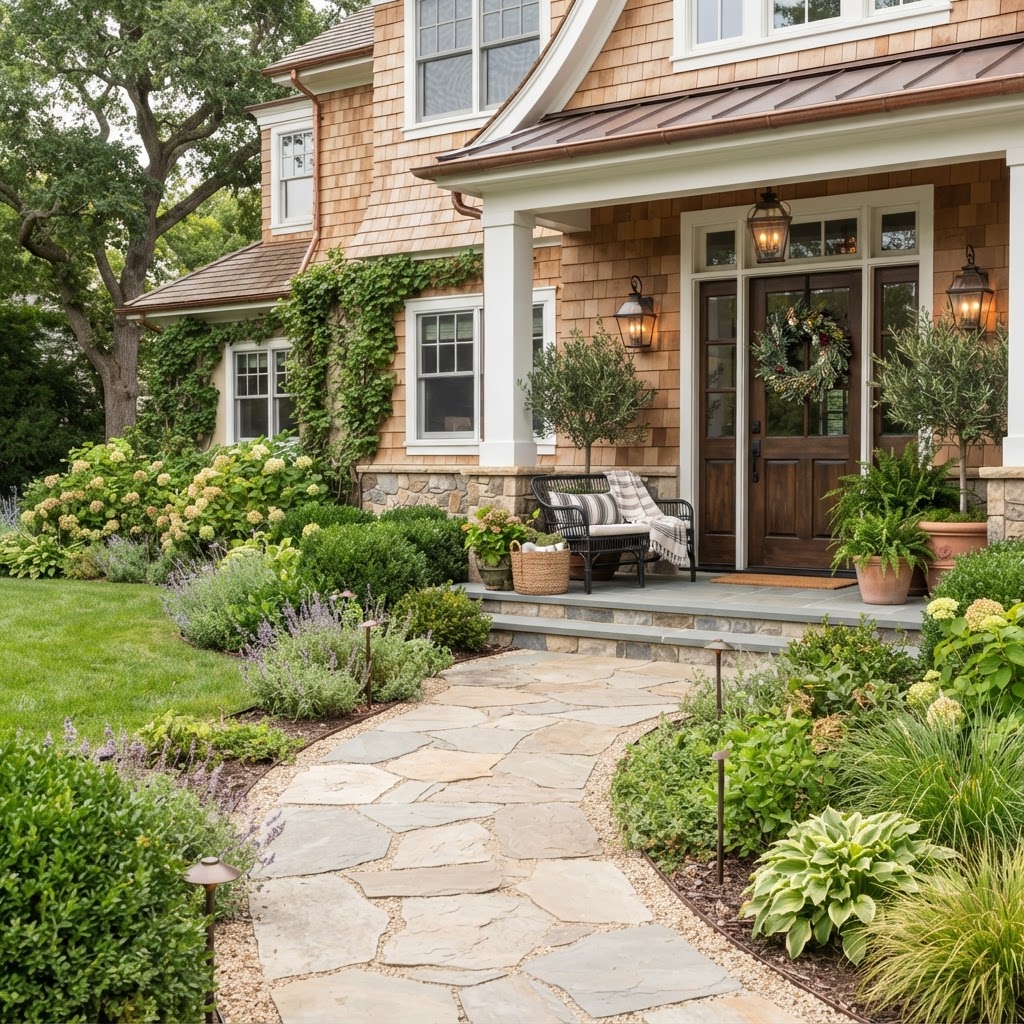
Curb Appeal Upgrades: Front Yard & Entry Guide
A practical guide to curb appeal upgrades, from landscaping and walkways to porches, lighting, and budget-smart front entry improvements.
Curb Appeal Upgrades: Front Yard & Entry Guide
Good curb appeal ideas do more than make a house look pretty from the street. They make your home feel cared for, easier to approach, safer at night, and more valuable if you plan to sell. I’ve seen tired facades transformed with a better walkway, a cleaner planting plan, and a front door color that finally fits the architecture.
The best part is that a smart front yard renovation doesn’t always mean a full tear-out. Sometimes the fix is structural, like replacing a cracked path. Sometimes it’s cosmetic, like fresh paint, larger house numbers, and layered lighting. The trick is knowing where to spend first.
This guide walks through the upgrades that matter most: landscaping, walkways, porches, lighting, materials, budgeting, and hiring the right pros. If you want curb appeal that still looks good a year from now, start here.
Key Takeaways
- Start with the bones: walkway layout, grading, lighting, and the front door matter more than decor alone.
- The best curb appeal ideas balance beauty with maintenance. A front yard should look good in February, not just the week after install.
- Hardscape and lighting usually deliver the biggest visual change per dollar because they create structure and improve safety.
- A phased front yard renovation is often the smartest route: repair first, then surfaces, then planting, then styling.
- Keep the architecture in charge. Modern homes, colonials, ranches, and cottages all need different materials, colors, and proportions.
Start With a Curb Appeal Plan, Not a Shopping List
Most homeowners jump straight to plants, pots, or a new mailbox. I’d start one step earlier. Stand across the street and take a photo of your house. Then ask three simple questions: Is the path clear? Does the entry stand out? Does the house feel balanced from left to right?
That quick test tells you where the real problem is. A home can have expensive landscaping and still feel flat if the walkway is too narrow, the porch light is tiny, or the front door disappears into the siding color. I’ve seen clients spend $3,000 on plantings only to realize the cracked concrete walk was still the first thing guests noticed.
Make a short punch list before you buy anything:
- Safety issues: uneven steps, poor drainage, weak lighting
- Structural wear: rotted trim, peeling paint, loose railings
- Visual clutter: too many plant varieties, dated fixtures, undersized decor
- Missing focal points: front door color, house numbers, planters, defined path
If your exterior work is part of a bigger remodel, it helps to map it against your interior plans too. Bari Decor’s Complete Guide to Whole Home Renovations is useful if you’re coordinating exterior work with larger upgrades.
Best Curb Appeal Ideas With the Biggest Visual Return
Not every upgrade pulls the same weight. A new walkway or properly scaled lighting can change the whole read of a house from the street. A few potted flowers can’t do that on their own.
Here’s where I see the best return for typical homes.
| Upgrade | Typical Cost | Timeline | Visual Impact |
|---|---|---|---|
| Front door paint or stain | $150-$900 | 1 day | High |
| New house numbers + mailbox | $100-$600 | 1 day | Medium |
| Exterior lighting refresh | $500-$3,500 | 1-3 days | High |
| Planting bed refresh | $1,200-$4,000 | 1-3 days | High |
| New front walkway | $1,800-$7,500 | 3-7 days | Very high |
| Porch makeover | $500-$8,000 | 2 days-2 weeks | Very high |
| Full front yard renovation | $5,000-$30,000+ | 1-6 weeks | Transformational |
The strongest upgrades create a sequence. You want the eye to move from the street, to the walk, to the porch, to the door. That’s why a balanced combination of hardscape, lighting, and planting usually beats one large isolated spend.
Designer’s note: If the house doesn’t have a clear focal point, make the front door and approach do the work. I’d rather see a modest house with a crisp path, good sconces, and healthy shrubs than a larger house with five disconnected ideas competing at the curb.
Walkways, Driveways, and Edging Set the Tone
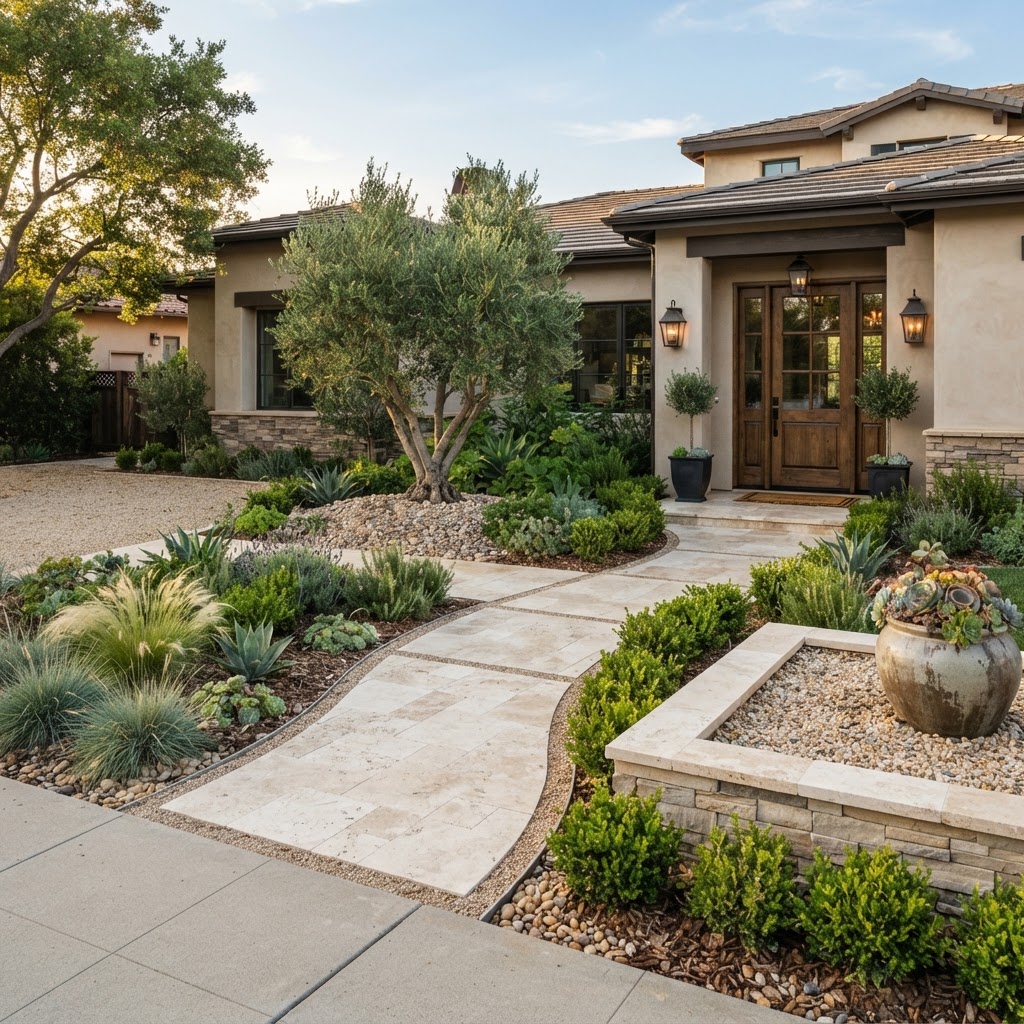
Your walkway is the handshake of the house. If it’s too narrow, cracked, or poorly lit, guests feel it before they ever reach the porch. For most homes, I like a front walk at least 42 to 48 inches wide. Two people should be able to walk side by side without stepping into the bed.
Material choice matters. Concrete is budget-friendly and clean-looking, but plain gray slabs can feel builder-grade if the house has character. Clay brick brings warmth. Bluestone looks refined but costs more. Pavers are flexible and easy to repair if roots or frost shift the ground.
| Material | Installed Cost | Best For | Watch Outs |
|---|---|---|---|
| Broom-finish concrete | $8-$14/sq. ft. | Budget-conscious projects | Can look flat without borders or scoring |
| Concrete pavers | $14-$25/sq. ft. | Traditional and transitional homes | Needs good base prep |
| Brick | $18-$30/sq. ft. | Historic homes, cottages, colonials | Weeds in joints if not maintained |
| Bluestone | $20-$40/sq. ft. | High-end entries, natural look | Cost and irregularity |
| Gravel | $5-$12/sq. ft. | Casual homes, long paths | Hard for strollers, heels, snow removal |
If you want a deeper breakdown, Front Walkway Materials Compared covers lifespan, pricing, and maintenance in more detail.
Don’t forget edging. Steel, aluminum, brick soldier courses, or stone bands give the path a finished line. That detail keeps mulch in place, defines lawn edges, and makes even a simple concrete walk look intentional.
Landscaping Should Frame the House, Not Hide It
A lot of front yards suffer from the same problem: too many small plants scattered around like confetti. Good landscaping creates structure first. I like to start with evergreen anchors near corners, then layer medium shrubs, then perennials or grasses for seasonal softness.
Keep windows and architectural features visible. Shrubs shoved against the foundation and pruned into hard balls date a home fast. If you’re reworking the beds, pull them outward instead of stacking plants tight to the house. A 5- to 8-foot-deep bed often looks more generous and is easier to compose than a skinny 2-foot strip.
For low-stress upkeep, choose plants based on mature size, not nursery size. This is where many front yard renovation budgets get wasted. The right plant in the right place saves years of shearing, replacement, and irrigation headaches. Bari Decor’s guide to Low-Maintenance Front Yard Landscaping Ideas is a strong next step if you want a polished yard without constant work.
A few combinations I use often:
- Clean modern look: boxwood, inkberry holly, feather reed grass, white hydrangea
- Soft traditional look: dwarf arborvitae, spirea, nepeta, salvia
- Dry climate approach: lavender, agave, yucca, rosemary, gravel mulch
- Shady entry: hydrangea, hosta, ferns, Japanese forest grass
Mulch color matters too. Dark brown usually looks richer and more natural than bright red. Keep it to a 2- to 3-inch layer, and don’t pile it against trunks or siding.
Upgrade the Porch, Front Door, and Entry Details
If the walkway gets people to the house, the porch seals the impression. This is where scale matters. Tiny sconces, a skinny doormat, and undersized planters make even a nice entry feel off.
Start with the door itself. A fresh coat of paint can be one of the cheapest, highest-impact upgrades you’ll make. Black, deep green, navy, warm red, and stained wood are dependable choices, but they need to fit the siding, roof, and trim. I like satin or semi-gloss exterior paint for durability and easier cleaning.
Then layer in the supporting details:
- Properly sized sconces or pendant
- Large house numbers visible from the street
- New lockset and door hardware in a consistent finish
- A substantial doormat or layered rug setup
- Two planters or one strong asymmetrical arrangement, depending on the porch shape
- Seating if there’s room for it without crowding the door swing
If your porch boards or landing need work, think about climate before choosing materials. Best Decking Materials for Your Climate is helpful for porch flooring decisions in wet, hot, or freeze-thaw regions.
Need more ideas at different price points? Front Porch Makeover Ideas on Any Budget breaks down what to do for a few hundred dollars versus a full refresh. For finishing touches like planters, outdoor textiles, mirrors, or small decor accents, the Bari Decor store is worth browsing.
Exterior Lighting Changes the House at Night
A house that looks good at noon but disappears after sunset is only doing half the job. Lighting is one of the smartest curb appeal ideas because it boosts safety and mood at the same time.
Every entry should have three layers of light if possible: ambient, task, and accent. Ambient light comes from a porch ceiling fixture or sconces. Task light helps with locksets, steps, and address visibility. Accent light can wash a tree, uplight a stone wall, or define the path.
Common mistakes I see all the time are fixtures that are too small, bulbs that are too blue, and path lights placed like runway markers. Warm white bulbs in the 2700K to 3000K range are usually the sweet spot for homes. Put path lights off to the side of the walk and stagger them so the effect is soft, not overlit.
A simple lighting package might cost $500 to $1,200 for new sconces and bulbs. A more complete system with path lights, tree uplighting, and a transformer often lands between $1,800 and $3,500. For a deeper look at fixture types and placement, see Best Exterior Lighting for Safer Curb Appeal.
Refresh Paint, Trim, Siding, and Small Hardware
Sometimes the biggest curb appeal problem isn’t design. It’s deferred maintenance. Dirty siding, peeling trim, rusted railings, and a faded garage door drag everything down.
Start with cleaning. A professional soft wash or pressure wash can make a shocking difference for $250 to $800, depending on house size and condition. After that, tackle obvious wear: repaint trim, repair shutters, caulk gaps, and replace bent gutters or dented downspouts where they’re visible from the front.
Hardware should feel coordinated, not matched to death. I’m comfortable mixing black lighting with a warm brass door knob or a bronze mailbox if the house style supports it. What matters is that the finishes look intentional and the scale fits the architecture.
If the budget allows, consider the garage door too. On many suburban homes it takes up more visual space than the front door. A better color, decorative hardware, or carriage-style panel profile can rebalance the facade quickly.
Budgeting a Front Yard Renovation Without Wasting Money
A front yard renovation can be as small as a weekend refresh or as large as a full exterior rework. The smartest budget is usually phased. Handle repairs first, then hardscape, then planting, then decor.
Here’s a realistic way to think about spending:
- $500-$1,500: paint the front door, replace lights, add planters, update numbers and mailbox
- $1,500-$5,000: refresh beds, edge the lawn, improve lighting, repair steps or railings
- $5,000-$15,000: install a new walkway, rebuild the porch, expand planting beds, improve drainage
- $15,000-$30,000+: redesign the full front yard, replace driveway sections, build retaining walls, add major lighting and planting plans
Don’t sink money into decorative items before the essentials are fixed. A $300 doormat setup won’t distract from spalling steps or patchy lighting. In most cases, the budget sequence I recommend is:
- Repair and clean
- Improve path and porch surfaces
- Add lighting and address visibility
- Install or simplify landscaping
- Finish with decor and styling
If you’re collecting numbers from local contractors, use Bari Decor’s quote request page early. It helps you compare pricing before the design shifts out of budget.
Hire the Right Pros and Phase the Work Smartly
Some curb appeal projects are great DIY jobs. Painting a door, swapping house numbers, or styling planters can be done in a day. Grading, electrical work, masonry, irrigation, and full planting plans usually need a pro.
The key is hiring the right mix. For a larger front yard renovation, you may need a landscape designer, mason, electrician, painter, and carpenter. On older homes, I often advise clients to bring in a designer early so the materials, colors, and fixture choices feel cohesive. Bari Decor’s guide on How to Hire an Interior Designer: A Complete Guide for Homeowners is useful even for exterior-facing design help because the process of scoping, vetting, and reviewing proposals is similar.
You can also browse home design and improvement professionals if you’re building your team from scratch.
A few rules I swear by on the job:
- Don’t order plants until grading and hardscape are final.
- Don’t finalize paint before checking it against the roof, stone, and brick in daylight.
- Don’t place lighting without testing it at night.
- Don’t crowd a small porch with furniture just because it fits on paper.
Phasing the work keeps quality higher. I’d rather see a homeowner complete the walkway and entry lighting this season, then tackle plantings in fall, than rush everything into one messy install week.
Summary
- Focus first on the approach: walkway, steps, lighting, and front door shape the whole experience.
- The strongest curb appeal ideas combine hardscape, landscaping, and entry details instead of relying on decor alone.
- A phased front yard renovation protects your budget and keeps you from redoing work later.
- Match materials, colors, and fixture scale to the architecture of the house.
- Hire pros for drainage, masonry, electrical, and larger design plans, and get quotes before committing.
Frequently Asked Questions
Written by
Bari Decor
Bari Decor — Industry Insights
Need a Professional for Your Project?
Get matched with verified home design professionals in your area.
Get Free Quotes