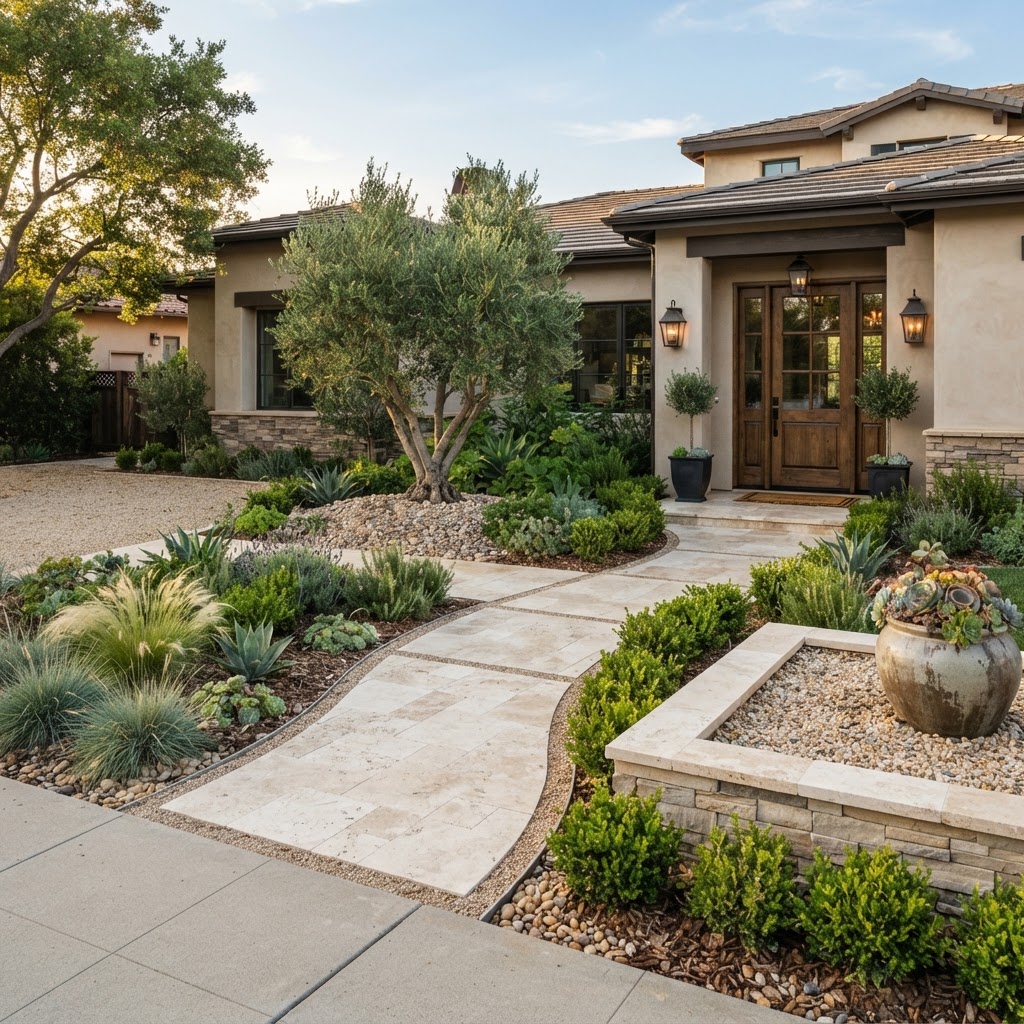
Low-Maintenance Front Yard Landscaping Ideas
Smart planting, simple hardscaping, and better layout choices can cut upkeep while giving your home polished, easy curb appeal.
Low-Maintenance Front Yard Landscaping Ideas
Low maintenance front yard landscaping isn't about making your yard look bare or boring. It's about making smart choices so the front of your home still feels cared for, welcoming, and polished without eating up every Saturday morning.
Most front yards get overdesigned in the wrong places. I see big thirsty lawns, tiny beds packed with high-maintenance shrubs, and decorative details that look good for one season and messy for the next three. A better approach is to simplify the layout, choose plants that stay in scale, and use hard surfaces where they actually save work. If you're planning a broader exterior refresh, start with Bari Decor's Curb Appeal Upgrades: Front Yard & Entry Guide for the big-picture strategy.
Key Takeaways
- Reduce lawn first. Grass is usually the highest-maintenance part of a front yard.
- Pick plants that keep their shape and fit the mature size of the bed.
- Use hardscaping to solve problem areas like narrow side strips, slopes, and mailbox zones.
- Install drip irrigation and proper edging if you want your yard to stay neat with less effort.
- Focus on the entry path, lighting, and foundation planting for the biggest easy curb appeal gains.
Low Maintenance Front Yard Landscaping Starts With Less Lawn
If a front yard feels like too much work, the lawn is usually the first suspect. Mowing, edging, fertilizing, watering, reseeding, and weed control add up fast. Replacing even 30% to 50% of turf with planting beds, gravel zones, or widened walkways can cut the workload in half.
The trick is not to scatter random islands around the yard. Keep the geometry clean. I like one generous foundation bed, one focal bed near the walkway or tree, and a clearly defined lawn panel if grass is still part of the plan. A simple layout reads as intentional, and it makes the whole property feel larger.
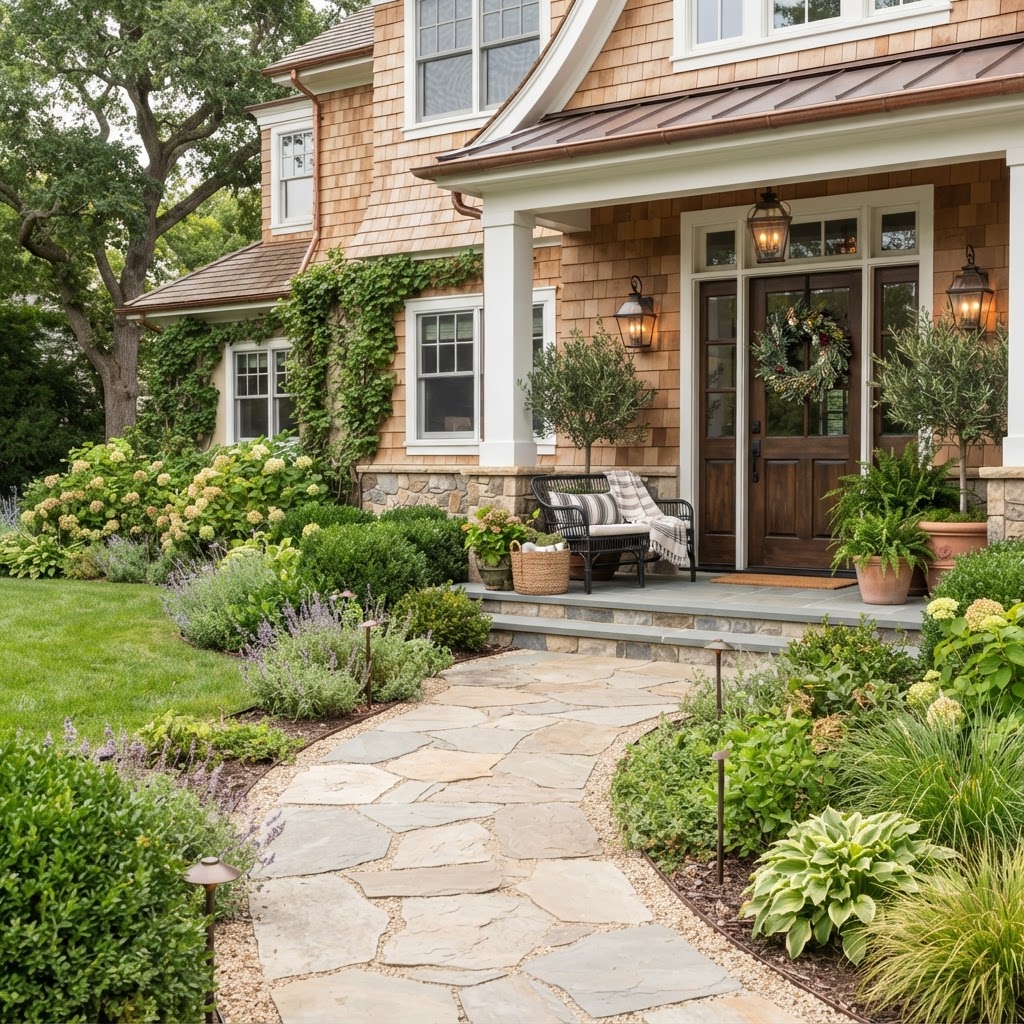
A front walk can also do a lot of the heavy lifting. Widening a narrow path from 30 inches to 42 or 48 inches instantly makes an entry feel more finished while reducing planting areas that collect weeds. If you're weighing concrete, pavers, bluestone, or gravel, Bari Decor's Front Walkway Materials Compared is a useful side-by-side guide.
Designer note: The easiest yard to maintain is the one with fewer edges. Every extra curve in lawn or bed line adds trimming time forever.
Choose Plants That Stay Neat Without Constant Pruning
The biggest planting mistake I see is using fast growers in small beds. A shrub that looks tidy in a 3-gallon nursery pot can be 6 feet wide in a few years. Then homeowners are out there shearing it into a green meatball every month.
Look for plants with a naturally compact habit, long seasonal value, and low water needs once established. Native plants are often a good fit, but not every native is low maintenance. Some spread aggressively or flop without a cutback. Read plant tags with mature size in mind, not just bloom color.
Here are plant categories that tend to work well in many front yards:
| Plant type | Good choices | Why they work | Maintenance level |
|---|---|---|---|
| Dwarf evergreen shrubs | boxwood, inkberry holly, dwarf yaupon, compact arborvitae | Year-round structure, easy to space | Low |
| Ornamental grasses | blue fescue, feather reed grass, pink muhly | Movement, drought tolerance, one seasonal cutback | Low |
| Tough perennials | nepeta, salvia, daylily, black-eyed Susan, lavender | Long bloom, pollinator-friendly, not fussy | Low to medium |
| Groundcovers | liriope, creeping juniper, sedum, ajuga in the right climate | Covers soil, reduces weeds | Low |
| Small accent trees | serviceberry, Japanese maple, redbud, olive in warm regions | Strong focal point without heavy shade | Low to medium |
In real projects, I often build a front yard around three layers: one small tree, a backbone of evergreens, and drifts of two or three perennials repeated throughout. Repetition matters. Ten of the same plant usually look calmer and cleaner than ten different plants.
For very low upkeep, avoid anything that drops messy fruit near the walkway, needs deadheading to look presentable, or grows so fast it swallows windows. Foundation planting should frame the house, not fight it.
Use Hardscaping Where Plants Struggle
Some areas are never going to be good planting beds. Think hell strips by the curb, narrow strips between the walk and house, steep slopes, or zones baked by reflected heat from concrete. In those spots, hardscaping can be a better-looking and lower-maintenance answer than forcing plants to survive.
Gravel, decomposed granite, pavers, steppers set in stone, and large-format concrete pads all have their place. The best choice depends on climate, drainage, and the style of the home. A sleek modern house can handle large concrete slabs with black Mexican pebbles. A cottage or traditional home usually looks better with brick edging, natural stone, and shredded bark mulch.
| Material | Best for | Upfront cost installed | Ongoing maintenance | Watch-outs |
|---|---|---|---|---|
| Shredded bark mulch | Planting beds | $3-$7/sq. ft. | Refresh every 1-2 years | Can wash on slopes |
| Gravel or river rock | Dry beds, side strips, mailbox areas | $8-$18/sq. ft. | Low if edged well | Weeds if installed poorly |
| Decomposed granite | Paths and informal areas | $10-$20/sq. ft. | Occasional raking and top-up | Not ideal in heavy freeze-thaw or steep runoff zones |
| Concrete pavers | Walkways, small patios, edging | $18-$35/sq. ft. | Very low | Needs solid base |
| Natural stone | Premium entries and stepping paths | $25-$50+/sq. ft. | Very low | Higher labor cost |
If your front porch, stoop, or landing is part of the project, tie those materials together with the architecture. Bari Decor's Front Porch Makeover Ideas on Any Budget can help you bridge the yard and entry so it all feels like one plan.
Mulch, Edging, and Irrigation Make or Break the Plan
A low-maintenance yard isn't just about plant choice. It's the invisible systems that keep the whole thing looking tidy. Good edging, proper mulch depth, and targeted irrigation save more time than most homeowners expect.
For mulch, 2 to 3 inches of shredded hardwood or pine bark is usually the sweet spot. It holds moisture, suppresses weeds, and gives beds a finished look. Don't pile it against trunks or shrub stems. That "mulch volcano" habit causes rot and insect problems.
Landscape fabric is another area where people get disappointed. Under gravel, a quality woven fabric can help with separation and stability. Under organic mulch in planting beds, it often becomes a headache. Mulch breaks down into soil on top, weed seeds land there anyway, and now you have weeds rooted through fabric.
Drip irrigation is worth the money in almost every planting renovation. A basic front-yard drip system often runs around $800 to $2,500 depending on zones, hose bib access, and whether trenching is needed. It waters roots instead of sidewalks, and it cuts down on fungal issues caused by spray heads hitting foliage.
Typical budget for a simple front yard refresh
| Item | Budget range |
|---|---|
| Remove old shrubs and clean beds | $500-$2,000 |
| New mulch and steel or aluminum edging | $1,000-$3,500 |
| New low-maintenance plants | $1,500-$6,000 |
| Drip irrigation | $800-$2,500 |
| Gravel or rock feature area | $1,200-$4,500 |
| New walkway or walkway widening | $2,500-$10,000+ |
If water is pooling near the foundation, fix that before spending money on pretty plants. Poor grading and runoff can damage much more than the landscape. Bari Decor's Basement Waterproofing Before You Remodel explains what to address before exterior cosmetic work covers up a drainage problem.
Focus on the Entry for Easy Curb Appeal
If you want easy curb appeal, put your energy where guests actually look: the path, the porch, the lighting, and the area around the front door. A simple front yard with a strong entry almost always feels more expensive than a busy yard with a weak approach.
Start with symmetry if the house architecture supports it. Matching planters, a pair of evergreen shrubs, or two cleanly spaced grasses near the walk can give the front elevation a settled look. If the house is more casual, asymmetry can still work, but keep the planting palette tight.
Lighting is another low-effort, high-impact move. Path lights, step lights, and a well-scaled sconce at the door improve safety and make the landscape look finished after dark. For fixture types and placement ideas, see Best Exterior Lighting for Safer Curb Appeal.
You don't need a lot of decor, either. One quality doormat, one oversized planter, updated house numbers, and a cleaner mailbox often do more than a dozen small accessories. If you're sourcing planters, outdoor accents, or entry details, the Bari Decor store is a good place to start.
If the front stoop boards, railings, or porch floor are worn, material choice matters. Homes in wet, hot, or freeze-thaw climates benefit from different exterior products, and Bari Decor's Best Decking Materials for Your Climate can help if your entry includes deck-style surfaces.
Keep the Design in Scale With the House and Your Life
One reason low maintenance front yard landscaping fails is that the plan doesn't match the house or the homeowner's routines. A formal colonial can carry clipped hedges and crisp symmetry. A ranch usually looks better with longer, lower planting masses. A small cottage can feel crowded if every inch is packed with shrubs.
Be honest about how much attention you want to give the yard. If you travel a lot, skip container gardens that need daily water in July. If you hate pruning, don't install hedges that demand shaping. If your kids cut across the yard every day, don't place delicate groundcover in their shortcut.
This is also where larger project planning comes in. If you're reworking the driveway, adding a garage apartment, or renovating multiple exterior zones, make the landscape part of the full scope so you don't redo work twice. Bari Decor's Complete Guide to Whole Home Renovations is helpful for sequencing bigger changes.
A polished front yard should feel like it belongs to the house and to the people living there. That's the real secret. Not more plants. Better decisions.
When Hiring a Pro Is the Smarter Move
There are plenty of front-yard updates a capable homeowner can handle: mulching, swapping shrubs, planting perennials, or adding simple solar lights. But some conditions deserve a professional eye right away.
Call in help if the yard slopes toward the house, the entry walk is cracking or heaving, drainage is poor, irrigation is confusing, or the front elevation needs a stronger layout than "put some bushes there." A landscape designer or design-build contractor can save you money by solving the structure first instead of replanting the same failing bed every two years.
If you're comparing prices, use Bari Decor to get quotes from local pros. If you want to browse options first, you can explore vetted home design and improvement professionals and find the right fit for your scope and budget.
Summary
- Reduce lawn and simplify bed lines if you want a front yard that stays neat with less work.
- Choose compact shrubs, ornamental grasses, and repeat plant groupings instead of a mixed collection of high-maintenance plants.
- Use gravel, pavers, or stone in problem zones where plants struggle or upkeep is constant.
- Invest in edging, mulch, and drip irrigation. Those details keep a yard looking finished.
- Put the strongest visual focus on the walkway, porch, and lighting for lasting easy curb appeal.
Frequently Asked Questions
Written by
Bari Decor
Bari Decor — Industry Insights
Need a Professional for Your Project?
Get matched with verified home design professionals in your area.
Get Free Quotes