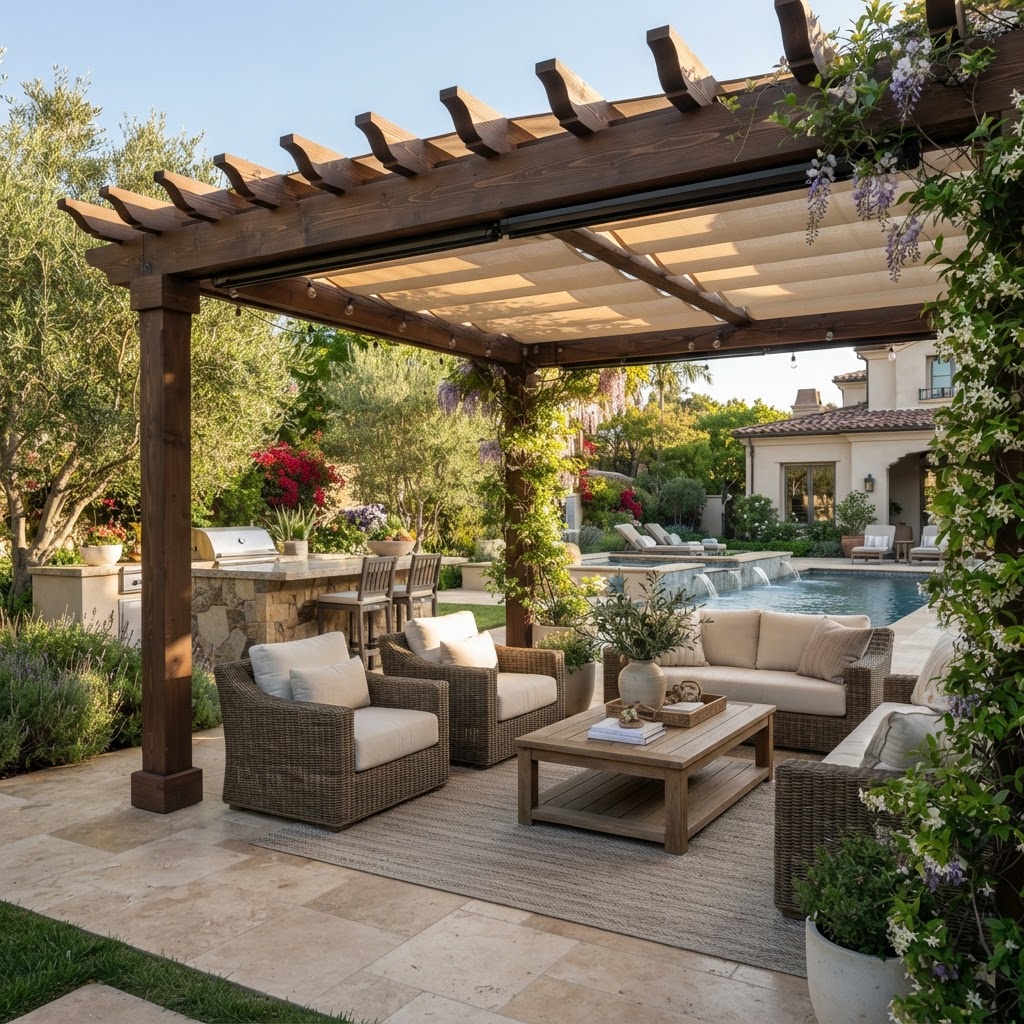
Pergola Ideas for Shade and Style
These pergola ideas help you add shade, structure, and a finished look to patios and backyard entertaining areas.
Pergola Ideas for Shade and Style
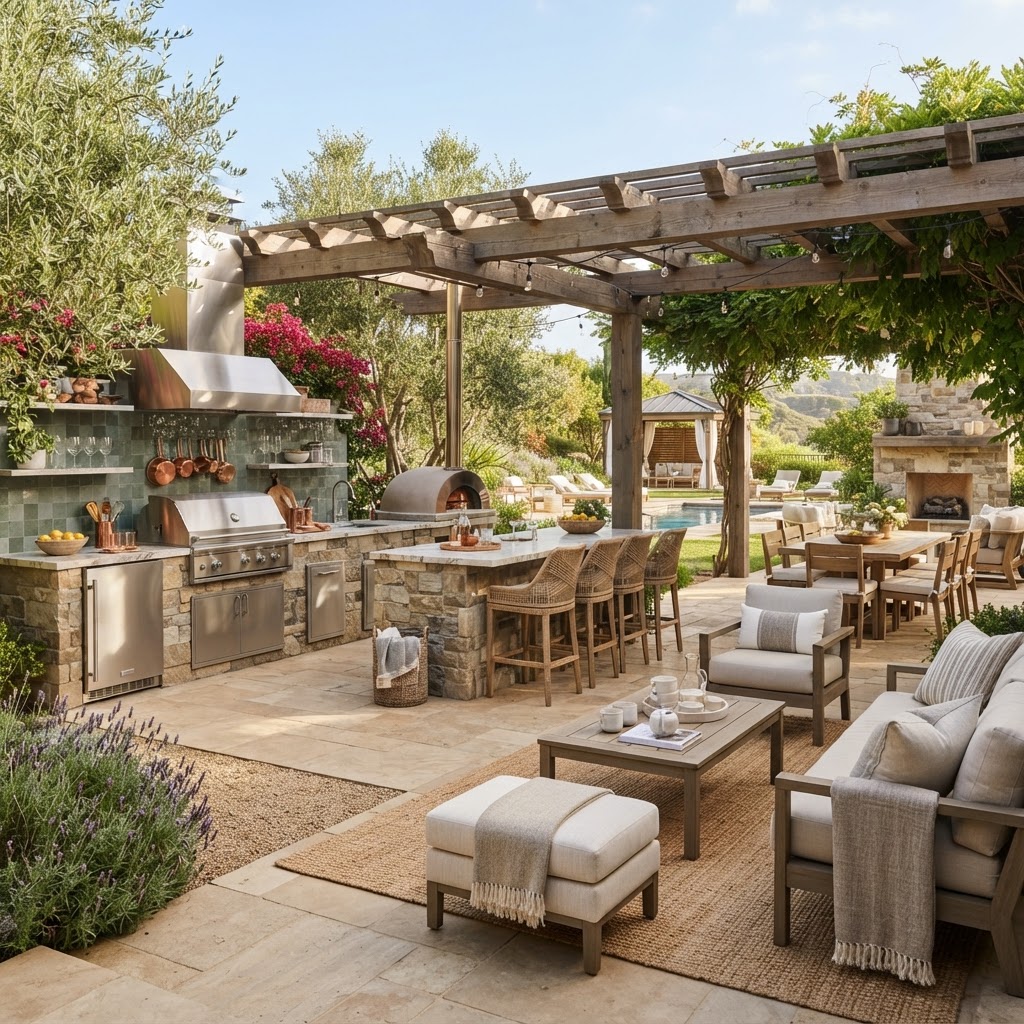
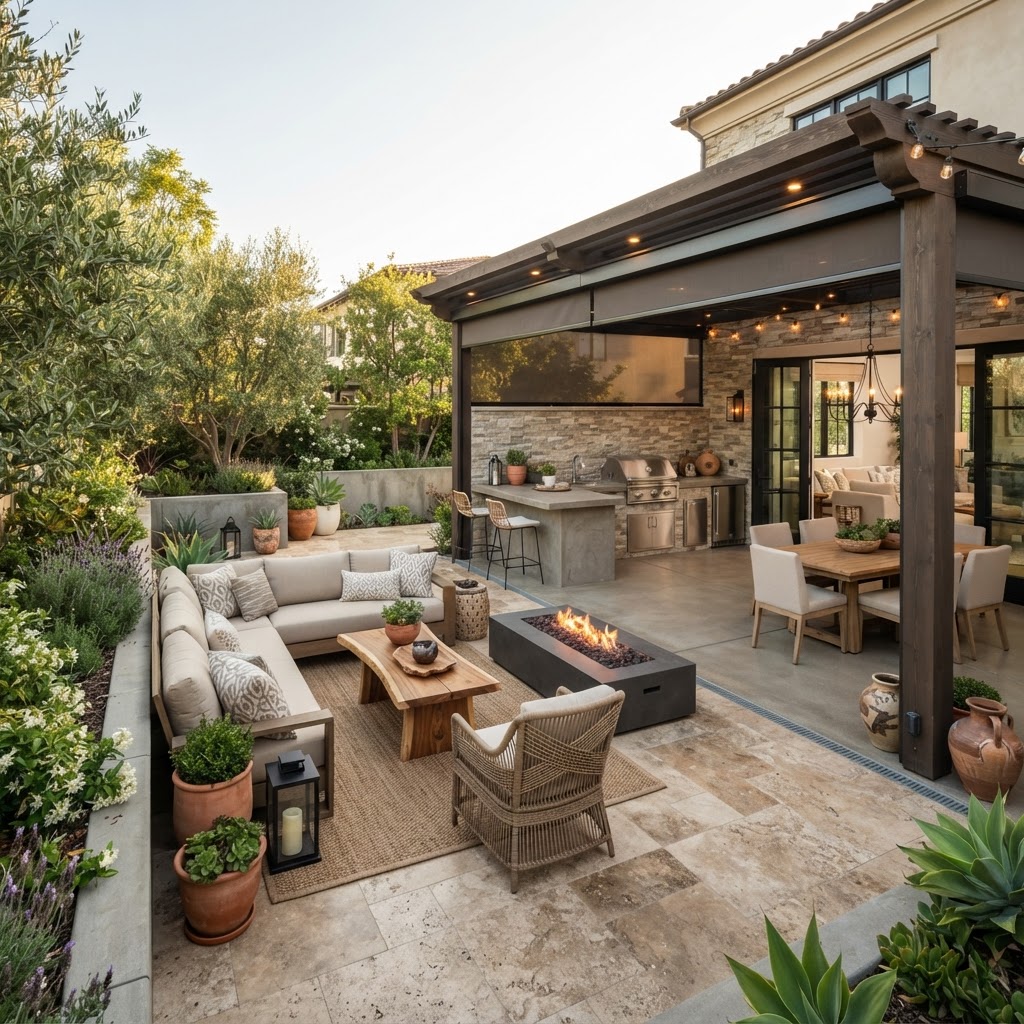
The best pergola ideas do more than dress up a patio. They solve a practical problem: your outdoor space needs relief from hard sun, a sense of structure, and a reason for people to linger. A plain patio can feel exposed at 2 p.m. in July. Add a well-sized pergola, and that same spot starts to feel like an outdoor room.
I’ve seen homeowners spend good money on furniture first, then realize no one wants to sit outside because there’s nowhere to escape the glare. That’s why pergolas are one of my favorite patio shade ideas. They can be simple and clean, lush and garden-like, or tailored to a modern entertaining setup with lights, fans, and a retractable roof.
If you’re planning the whole space from the ground up, start with this patio design and installation guide. A pergola works best when the hardscape, traffic flow, dining area, and shade plan all support each other.
Key Takeaways
- A basic open-slat pergola gives filtered shade, not full sun or rain protection.
- Cedar and aluminum are the strongest all-around choices for most homeowners because they balance looks, durability, and upkeep.
- Good pergola ideas start with furniture layout, sun direction, and post placement, not stain color.
- Installed costs usually range from about $3,500 for a small kit to $30,000 or more for a custom motorized louvered system.
- Footings, permits, drainage, lighting, and surface material matter just as much as the pergola itself.
- If your patio is new, coordinate the pergola plan with the base, pavers, and any outdoor kitchen layout before construction starts.
Start by deciding what kind of shade you actually need
A lot of homeowners picture a pergola and assume it will block the sun like a roof. Sometimes it will. Sometimes it won’t. A traditional pergola with evenly spaced rafters creates dappled shade, which is pleasant for morning coffee but may not help much with western sun in the late afternoon.
Ask yourself a few plain questions. Do you want enough shade for a dining table at lunch? Do you need rain protection for outdoor cushions? Are you trying to cool a lounge area, or cover a grill and prep zone? The answer changes the design. Open rafters, a fabric canopy, a louvered roof, and a solid polycarbonate panel all behave differently.
Sun orientation matters more than most people expect. If your patio faces west, I’d put real effort into overhead coverage plus some side screening, curtains, or slatted panels. If it faces north or east, an open pergola may be enough. That one decision can save you from building something pretty that still leaves everyone squinting.
Designer’s note: The most common mistake I see is sizing a pergola around the patio instead of the activity. Cover the table, seating group, or cooking zone first. Empty slab around the edges can stay uncovered.
Pergola ideas by material and style
Some of the strongest pergola ideas start with matching the material to the house. A white vinyl pergola can look right at home on a traditional Colonial. A slim black aluminum frame works beautifully on a modern build. A stained cedar pergola feels warm, natural, and expensive without looking fussy.
Wood still gives the richest look in my opinion, especially cedar or redwood. It has depth, grain, and a custom feel that powder-coated metals can’t fully copy. Aluminum wins on low maintenance. It’s especially good in hot, wet, or coastal climates where homeowners don’t want to restain every few years.
| Material | Best look | Maintenance | Typical installed cost | Best for |
|---|---|---|---|---|
| Pressure-treated wood | Casual, budget-friendly | Moderate to high | $3,500-$8,000 | Simple backyard projects |
| Cedar | Warm, upscale, natural | Moderate | $6,000-$15,000 | Most high-end residential patios |
| Vinyl | Traditional, clean | Low | $5,000-$11,000 | Low-upkeep homes with classic architecture |
| Aluminum | Modern, crisp | Low | $4,500-$12,000 | Contemporary patios and sunny climates |
| Motorized louvered aluminum | Luxury, architectural | Low | $12,000-$30,000+ | Full outdoor living rooms |
If you’re building the patio surface too, choose the hardscape and pergola together. Cedar over tumbled pavers feels very different from black aluminum over large-format concrete pavers. To compare hardscape options, see Stamped Concrete vs Pavers and this detailed Paver Patio Cost Guide.
Patio shade ideas that work beyond basic rafters
If your goal is real comfort, think beyond the classic open-top frame. Some of the best patio shade ideas layer more than one element: slats overhead, a retractable canopy below, and curtains or screens on the hot side. That gives you flexibility without turning the patio into a dark box.
Retractable fabric canopies are excellent for families who want a softer look and adjustable shade. They usually cost less than a motorized louvered roof, and they make a standard pergola much more usable. Louvered systems cost more, but they’re the best answer if you want sun control plus rain protection. Many can close fully during a storm and reopen once the weather clears.
Climbing vines can be beautiful, but I’m careful with that recommendation. Wisteria and trumpet vine can get heavy fast, drop debris on furniture, and complicate maintenance. If you want a greener effect with less mess, use cable trellises on one side panel and keep the roof structure cleaner.
| Shade option | Sun protection | Rain protection | Cost impact | What to know |
|---|---|---|---|---|
| Open rafters only | Light to moderate | None | $ | Best for filtered light and looks |
| Fabric canopy | Moderate to high | Low | $$ | Softer look, may need seasonal care |
| Fixed slat roof | Moderate | Low | $$ | Clean lines, consistent shadow pattern |
| Motorized louvers | High | High | $$$$ | Best comfort, highest budget |
| Polycarbonate roof panels | High | High | $$$ | Good for rain, can feel warmer underneath |
Size, placement, and layout mistakes to avoid
A pergola should fit the furniture, not just the slab. If you have a dining table with chairs, leave enough covered space for people to pull chairs back comfortably. I like at least 30 to 36 inches of extra clearance beyond the furniture edge in active zones. A 10 by 10 pergola sounds generous on paper, but once you put in a table, six chairs, and planters, it can feel tight.
Post placement matters. Nothing ruins a layout faster than a support post sitting right where someone needs to walk, or clipping the corner of a sectional. On grill patios, keep posts away from lid swing and service paths. If your pergola connects to a cooking zone, this guide to outdoor kitchen patio layout ideas is worth reviewing before final measurements are set.
Attached pergolas feel more integrated with the house, but they need careful flashing and structural support. Freestanding pergolas give you more flexibility and are often easier to place over existing patios. If you’re unsure about setbacks, footings, or local rules, check the principles in Do You Need a Permit for a Deck?. Pergolas aren’t governed exactly the same way everywhere, but attached structures and new footings often trigger similar permit questions.
If you’re still sorting out patio shape, drainage, and traffic flow, go back to the patio design and installation guide. It’s much easier to plan the pergola early than to retrofit one after the patio is already poured or laid.
What a pergola really costs
Homeowners usually ask for a pergola price as if it’s one number. It isn’t. Cost depends on size, material, whether it’s a kit or custom build, how much foundation work is needed, and whether you’re adding electric, fans, heaters, or motorized shade. Labor also rises fast if the crew has to cut through an existing patio to pour proper footings.
For a straightforward install on an existing slab, a small aluminum or pressure-treated kit may land around $3,500 to $6,500 installed. A custom cedar pergola over a 12 by 16 or 14 by 18 patio often falls between $7,500 and $15,000. Premium louvered systems with lighting, drainage, and power can hit $20,000 to $30,000 or more.
| Pergola type | Typical size | Installed cost | Typical timeline |
|---|---|---|---|
| Basic kit pergola | 10 x 10 to 10 x 12 | $3,500-$6,500 | 1-2 days |
| Mid-range cedar pergola | 12 x 14 to 12 x 16 | $6,500-$12,000 | 2-4 days |
| Custom wood pergola with shade add-ons | 12 x 16 to 14 x 18 | $9,000-$18,000 | 3-7 days |
| Louvered pergola system | 12 x 12 to 16 x 20 | $12,000-$30,000+ | 2-5 days after fabrication |
Common add-on costs:
- Footings and concrete work: $800-$2,500
- Electrical for lights, outlets, or a fan: $500-$2,000
- Retractable canopy: $700-$3,000
- Privacy screens or decorative panels: $500-$3,500
- Built-in lighting or heaters: $300-$4,000+
If the pergola is going over a new patio, build the whole budget together. Surface choice changes the total in a real way. Use the Paver Patio Cost Guide for pricing ranges, and compare finishes in Stamped Concrete vs Pavers before you lock in the plan.
Style the pergola so the space feels finished
A pergola frame by itself can still feel a little bare. The spaces that photograph well and live well have layers: lighting, furniture scaled to the footprint, planters, outdoor textiles, and at least one vertical element that softens the structure. That might be drapery panels, a slatted privacy wall, or tall container plantings at the corners.
Lighting is where a pergola really earns its keep. String lights are fine, but integrated downlights, a ceiling fan with light, or wall sconces on an adjacent masonry surface feel far more polished. For planters, lanterns, outdoor accents, and entertaining pieces, the Bari Decor store is a smart place to finish the room without making it feel overdesigned.
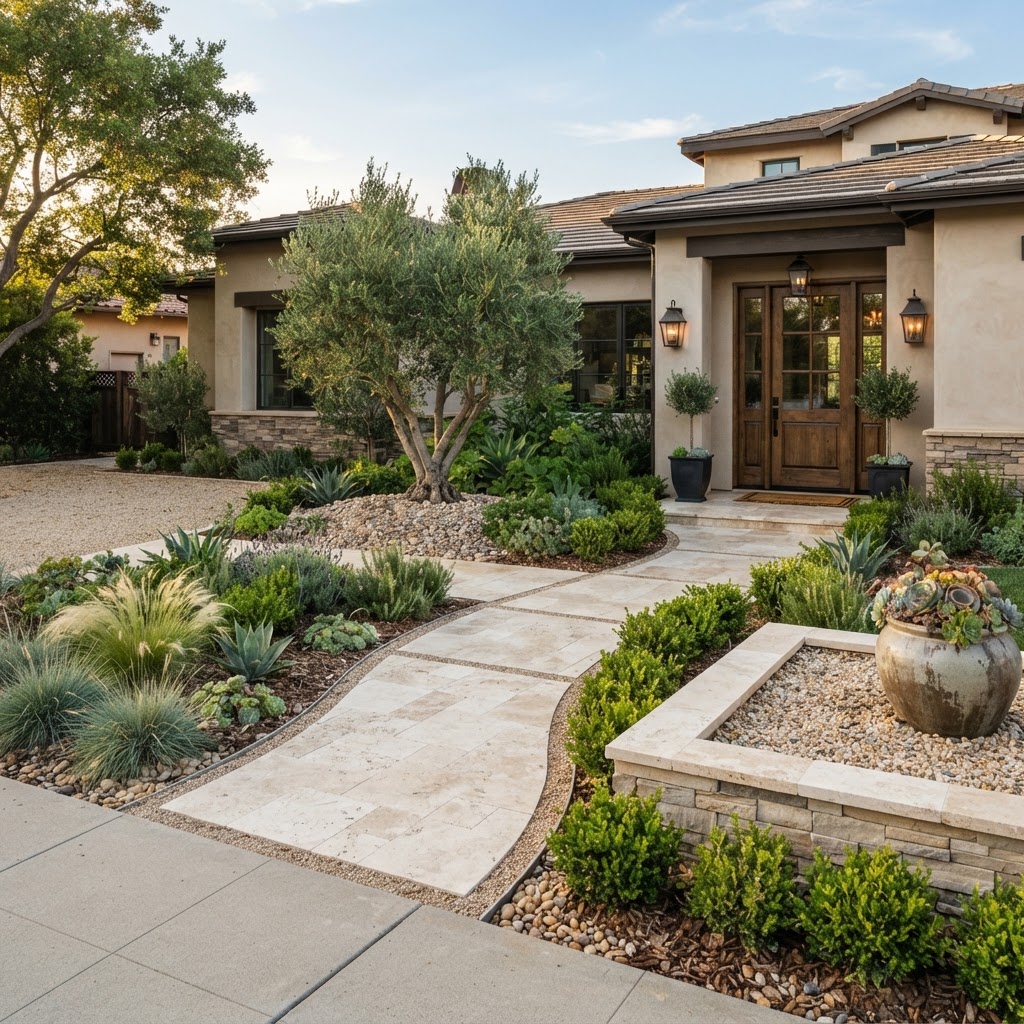
Tie the pergola into the rest of the property too. If your front yard is simple and water-wise, carry that same restraint into the backyard with ideas from low-maintenance front yard landscaping ideas. If you’re trying to connect materials from the front path to the patio, front walkway materials compared can help you create a more unified exterior palette.
When to DIY and when to hire a pro
A basic pergola kit can be a reasonable DIY project if the patio is level, the structure is freestanding, and you’re not dealing with electrical, drainage, or custom cuts. I still tell homeowners to be realistic. Even a simple 10 by 10 kit involves careful layout, anchoring, squaring posts, and managing weight safely during assembly.
Hire a pro for anything attached to the house, anything custom, or anything that needs engineered footings. The same goes for motorized louvered systems, windy sites, and patios that slope or drain toward the house. A good installer will coordinate the structure, electrical, and finish work so you don’t end up fixing avoidable mistakes later.
If you want to compare local help, browse experienced outdoor remodeling professionals. When you’re ready to price the work, ask for a few detailed bids through Bari Decor quote requests so you can compare materials, scope, and warranty coverage side by side.
Summary
- The best pergola designs match the way you use the patio, not just the style of the house.
- Open-top pergolas look beautiful, but they don’t provide full shade unless you add canopies, louvers, or panels.
- Cedar and aluminum are the two safest choices for most homes, depending on whether you prefer warmth or low upkeep.
- Budget for footings, lighting, and patio coordination, not just the frame itself.
- Plan the pergola with the patio layout early, especially if you’re adding pavers, a grill station, or new landscaping.
Frequently Asked Questions
Written by
Bari Decor
Bari Decor — Industry Insights
Need a Professional for Your Project?
Get matched with verified home design professionals in your area.
Get Free Quotes