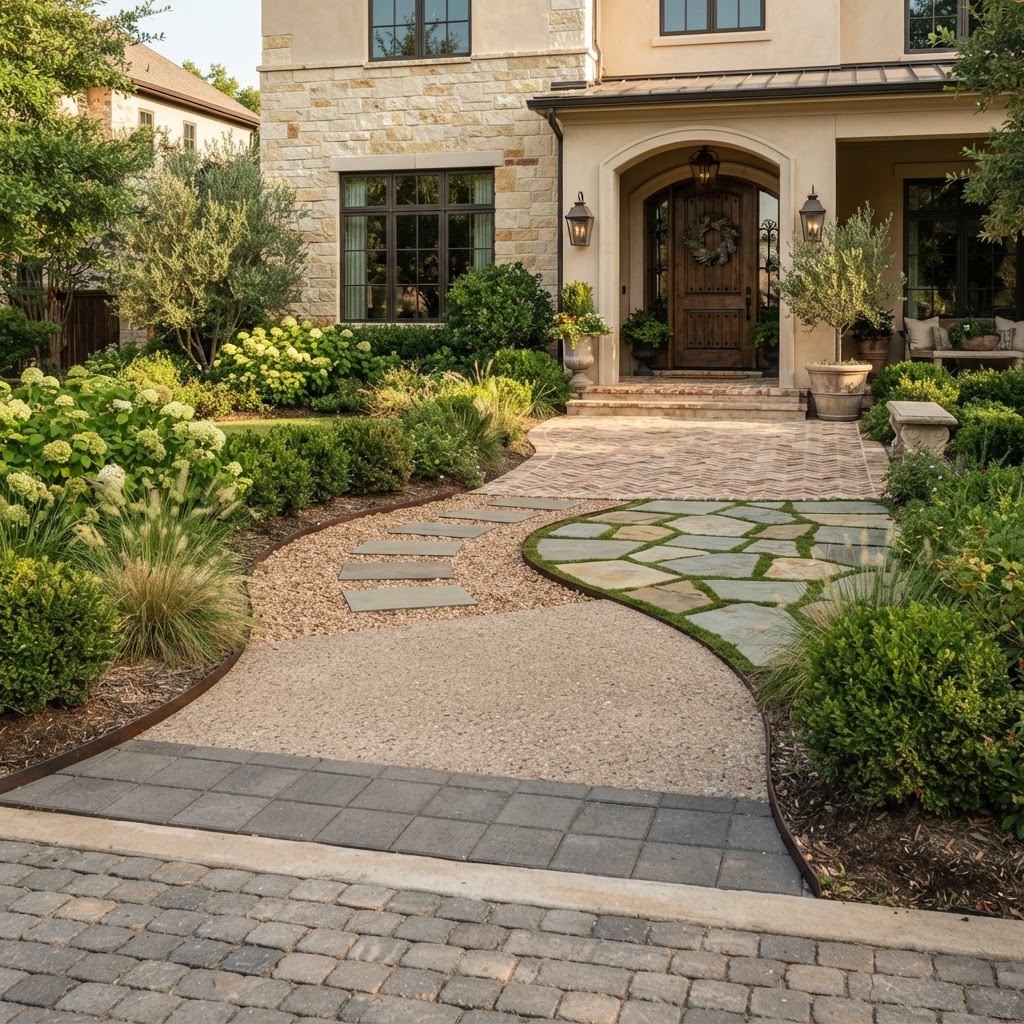
Front Walkway Materials Compared
Compare front walkway materials like pavers, concrete, gravel, stone, and brick by cost, durability, maintenance, and curb appeal.
Front Walkway Materials Compared
Choosing the right front walkway materials has a bigger effect on your home's first impression than most homeowners expect. Your walkway is one of the few surfaces every guest touches, sees up close, and judges in about three seconds. If it looks cracked, patchy, or out of scale with the house, the whole entry feels tired. If it feels solid underfoot and matches the architecture, the home instantly looks more cared for.
I’ve specified and rebuilt a lot of front walks over the years, from modest suburban entries to formal stone approaches on custom homes. The best material isn’t always the most expensive one. It’s the one that fits your climate, drainage, budget, and the style of your house. If you’re planning a larger refresh, pair this guide with our curb appeal front yard and entry guide so the walkway, porch, planting, and lighting all work together.
A good front walk should do four things well: hold up to weather, drain properly, stay safe, and look like it belongs. Below, I’ll compare front walkway materials side by side so you can decide whether concrete, pavers, gravel, brick, or natural stone makes the most sense for your project.
Key Takeaways
- Concrete is usually the lowest-cost solid-surface option, but it’s harder to repair invisibly if it cracks.
- Pavers cost more upfront than concrete, yet they’re easier to fix, often last longer, and usually offer better curb appeal.
- Gravel is the cheapest option, but it’s not ideal for high-traffic front entries, strollers, wheelchairs, or frequent snow shoveling.
- Brick and natural stone bring the most character, but they also require a bigger budget and a skilled installer.
- Base prep, grading, edging, and drainage often matter more than the surface material itself.
- A 4-foot-wide walkway feels comfortable for most homes; 5 feet feels more generous and upscale.
How to compare front walkway materials
Homeowners usually start with color and finish, but I always start with performance. Ask how the path handles freeze-thaw cycles, heavy rain, tree roots, and day-to-day foot traffic. Think about who uses the walkway too. A front path used by kids, delivery drivers, older adults, and guests in dress shoes needs a more stable surface than a decorative garden path.
The second filter is maintenance. Some people are happy to refill joints, pull weeds, and reset loose pieces once in a while. Others want a path they can blow off and forget. Neither approach is wrong. You just want to be honest about what kind of upkeep you’ll actually do three years from now.
Here’s a quick side-by-side comparison:
| Material | Typical Installed Cost | Lifespan | Maintenance | Curb Appeal | Best For |
|---|---|---|---|---|---|
| Gravel | $5-$12/sq. ft. | Indefinite with replenishment | High | Casual | Cottage, rustic, low-budget entries |
| Concrete | $8-$18/sq. ft. | 25-30 years | Low to moderate | Fair to good | Budget-conscious, clean-lined homes |
| Pavers | $15-$30/sq. ft. | 30-50 years | Moderate | Very good | Most homes, especially resale-minded projects |
| Brick | $18-$32/sq. ft. | 25-50 years | Moderate | Excellent | Traditional, colonial, cottage homes |
| Natural stone | $20-$40+/sq. ft. | 50+ years | Moderate | Premium | High-end, historic, and custom homes |
Designer’s rule of thumb: If people will roll a stroller, walker, suitcase, or trash bin across the path, skip loose gravel and prioritize a firm, level surface.
Concrete walkways: lowest upfront cost for a clean look
Concrete is the baseline option in most front walkway materials comparisons because it’s widely available, fast to install, and generally affordable. A standard broom-finish concrete walk usually lands around $8 to $14 per square foot installed. If you add color, borders, exposed aggregate, stamping, or curved forms, the price can rise to $14 to $28 per square foot.
Its biggest selling point is value. For a straightforward suburban front walk, concrete often gives you the best price-to-function ratio. It works especially well with modern, ranch, builder-grade, and minimalist homes where a simple, clean approach looks intentional rather than plain.
The downside is cracking. All concrete cracks eventually. Good control joints, proper reinforcement, and solid base prep help, but they don’t eliminate the risk. Once a slab cracks or settles, repairs usually show. That matters at the front of the house, where every flaw is on display.
If you go with concrete, spend the extra money on the finish and the edges. A plain gray walk can feel cheap if the layout is awkward or the slab stops abruptly at patchy grass. A wider path, a subtle curve, crisp edging, and coordinated plantings from these low-maintenance front yard landscaping ideas can make a basic concrete walk feel much more finished.
Walkway pavers vs concrete: where pavers earn the higher price
In the usual walkway pavers vs concrete debate, concrete wins on upfront cost and pavers win on flexibility, repairability, and appearance. Concrete pavers typically cost $15 to $30 per square foot installed, depending on the pattern, paver thickness, border treatment, and site conditions. That’s more than basic concrete, but there’s a reason so many homeowners still choose them.
Pavers are installed as individual units over a compacted base, which means they move a little with the ground instead of acting like one rigid slab. In freeze-thaw climates, that can be a real advantage. If a section settles or stains, a contractor can lift and reset that area without replacing the whole walkway.
From a design standpoint, pavers also give you more control. You can mix field colors, add a soldier-course border, widen the entry pad at the porch, or tie the pattern into steps and driveway bands. That’s why I often recommend them for homeowners already planning a broader exterior update, especially if the front entry connects visually to a porch, stairs, or future hardscaping. If your porch also needs work, these front porch makeover ideas on any budget help you build a more coordinated plan.
Pavers do have tradeoffs. Joint sand needs occasional refreshing, weeds can appear if maintenance is neglected, and poor installation causes shifting. This is not a material to bargain-shop on labor. A cheap paver job can look good for six months and sloppy by the second winter. If you want accurate pricing, it’s smart to get quotes from local walkway installers and compare their base-prep specs, not just the total number.
Quick pros and cons: pavers vs concrete
| Option | Pros | Cons |
|---|---|---|
| Concrete | Lower upfront cost, fast install, clean look, low upkeep | Cracks are hard to hide, repairs are visible, less design flexibility |
| Pavers | Easier repairs, richer appearance, more patterns/colors, strong resale appeal | Higher cost, joints need upkeep, installation quality matters a lot |
Brick and natural stone: classic looks, higher budgets
Brick has a warmth that very few materials can fake. It’s especially strong on colonial, Cape Cod, Tudor, cottage, and older homes where a concrete path can feel out of character. Installed costs usually run $18 to $32 per square foot. Brick can chip, the joints may need maintenance, and slick moss can become an issue in shaded areas, but visually it brings a lot of charm.
Natural stone is the premium end of most front walkway materials lists. Bluestone, Pennsylvania flagstone, limestone, slate, and granite each create a different look, and the price reflects that range. Expect many projects to land between $20 and $40 per square foot installed, with custom layouts, thicker stone, and difficult access pushing higher.
Stone is rarely the cheapest answer, but it often looks the most permanent. On high-end homes, it can make the entire property feel more established. I’ve had clients spend more on stone than they first planned because once samples were laid next to the facade, everything else looked flat by comparison.
This is also the category where installer skill matters most. Irregular stone, dry-laid systems, mortar-set stone, and brick patterns all need a mason who understands layout, pitch, and edge restraint. If you’re comparing contractors, start by browsing experienced masonry and landscape professionals and ask to see front-entry projects, not just patios.
Gravel: budget-friendly, but not right for every entry
Gravel is usually the least expensive option, often $5 to $12 per square foot installed with proper edging and base prep. For long paths, farmhouse settings, cottages, or informal gardens, it can look great. Pea gravel, decomposed granite, and crushed stone each behave differently, so don’t assume one “gravel” price covers all versions.
For a true front entry, though, gravel has limits. It migrates into beds and lawn, gets kicked around, is awkward with snow shovels, and doesn’t feel polished on many suburban homes. It’s also less comfortable for heels, strollers, rolling bins, wheelchairs, and anyone with mobility issues.
I’ll sometimes recommend gravel for a side path or a secondary walk to a gate, but I’m careful about using it as the main approach to the front door. If you love the relaxed look, you can get a similar feeling with stabilized decomposed granite or with stone steppers framed in gravel, though those systems need very careful installation.
Gravel looks best when the surrounding details are strong: clean steel or brick edging, structured plantings, and a well-styled porch. The finishing touches matter here, from planters and doormats to house numbers and lanterns, and you can source those through the Bari Decor store.
Cost factors that change the final price
Material cost is only part of the bill. On real job sites, the price usually shifts because of demolition, grading, drainage, access, and detailing. A straight 30-foot walk on flat ground is one number. A curved walk with steps, tree roots, a porch landing, and tight side-yard access is another story.
A lot of homeowners compare estimates without noticing that one contractor included excavation, compacted stone base, geotextile fabric, drainage correction, and cleanup while another did not. That’s how “cheap” walkway bids turn into expensive repairs a year later.
Here’s a practical cost example for a typical 4' x 30' front walk, or about 120 square feet:
| Material | Approx. Surface Cost | Typical Total Installed Range |
|---|---|---|
| Gravel | $600-$1,440 | $900-$2,000 |
| Concrete | $960-$2,160 | $1,400-$3,000 |
| Pavers | $1,800-$3,600 | $2,400-$4,800 |
| Brick | $2,160-$3,840 | $2,800-$5,200 |
| Natural stone | $2,400-$4,800+ | $3,200-$6,500+ |
Common add-ons that raise price:
- Demolition and haul-away of old concrete: $500-$1,500+
- Steps or elevation changes: $300-$800 per step, depending on material
- Drainage work or regrading: $800-$3,000+
- Lighting along the path: varies widely, but often worth it for safety and resale
- Border courses, banding, or decorative inlays: usually adds 10% to 25%
If you’re already improving the entry sequence, combine the walkway plan with best exterior lighting for safer curb appeal. It’s one of the smartest upgrades you can do at the same time because trenching and site work are already happening.
Which material fits your home best?
If your budget is tight and you want a clean, practical result, concrete is often the right answer. If you care about long-term flexibility, stronger resale appeal, and a more tailored look, pavers are usually worth the premium. For traditional homes, brick has character that’s hard to beat. For custom or historic homes, natural stone often looks the most authentic. Gravel works best where a casual look is part of the architecture, not where you’re trying to force elegance on a basic front entry.
I also think about the whole experience of arriving home. The walkway should make sense with the porch, lighting, landscaping, and even adjacent materials like decking or steps. If you’re coordinating several exterior upgrades, it helps to review the bigger sequence in this complete guide to whole home renovations, and if your front entry includes a deck or landing, local rules can come into play just like they do in this permit guide for deck projects.
Climate matters too. In freeze-thaw regions, I’m extra picky about base prep and drainage. In hot, sunny climates, I think about surface glare and heat buildup. If your walkway needs to relate to a nearby porch or platform, this guide to best decking materials for your climate can help you choose finishes that won’t fight each other.
A front walkway is a relatively small project, but it has outsized visual impact. Done well, it makes the home feel welcoming before anyone even reaches the door.
Summary
- Concrete is the most budget-friendly solid surface, but cracks are its weak point.
- Pavers usually offer the best balance of durability, repairability, and curb appeal.
- Brick and natural stone cost more, yet they often deliver the strongest architectural character.
- Gravel is affordable but better for informal paths than most primary front entries.
- In any front walkway materials project, base prep and drainage are what separate a lasting installation from a short-lived one.
Frequently Asked Questions
Written by
Bari Decor
Bari Decor — Industry Insights
Need a Professional for Your Project?
Get matched with verified home design professionals in your area.
Get Free Quotes