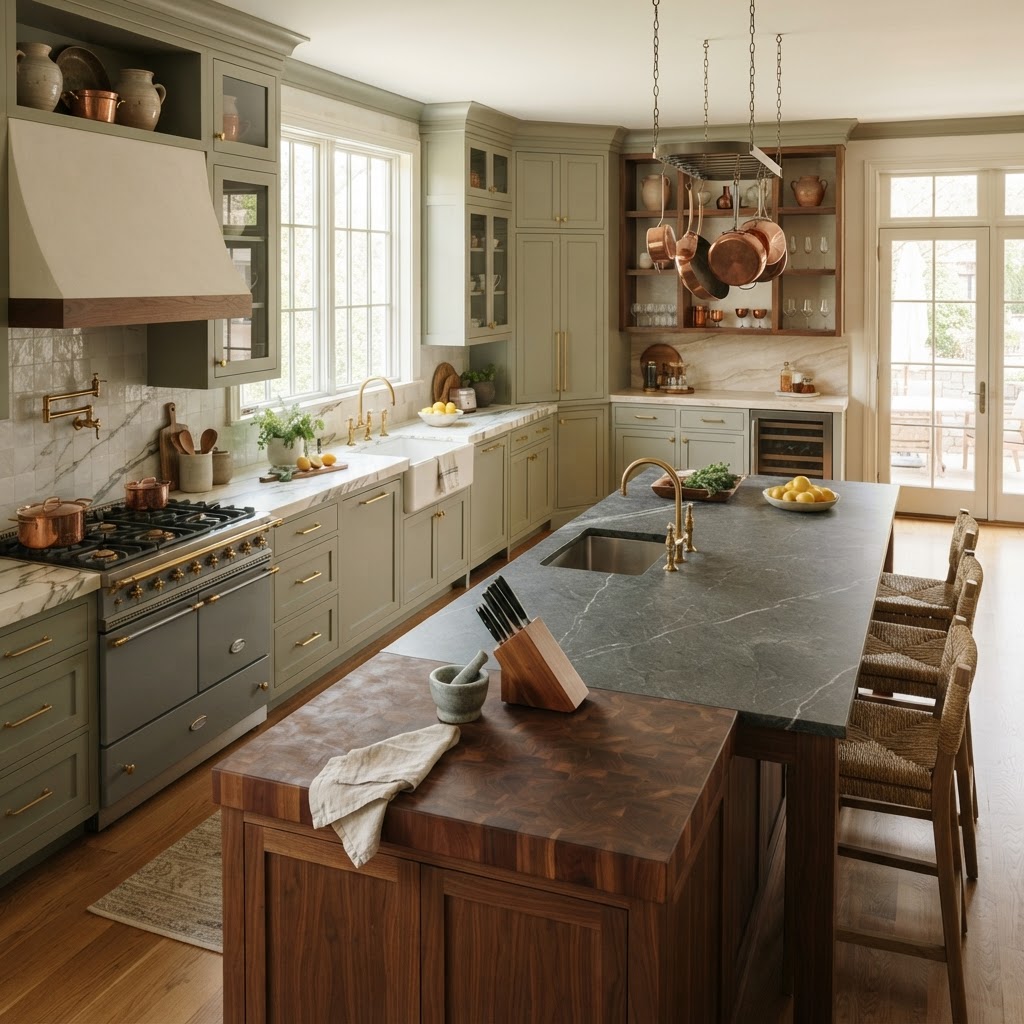
Kitchen Countertop Materials Compared: Pros and Cons
Quartz, granite, marble, or butcher block? Compare the most popular kitchen countertop materials to find the best fit for your home and budget.
Kitchen Countertop Materials Compared: Pros and Cons
Choosing kitchen countertops is one of those decisions that follows you every single day. You'll touch them while cooking breakfast, lean on them while waiting for coffee, and notice them every time a guest walks through your door. Get it right, and they're practically invisible — just a surface that works. Get it wrong, and you're either resealing every six months, wincing at every scratch, or wishing you'd spent a little more.
The good news: there's no single "best" kitchen countertop material. There's just the best one for you — your cooking habits, your budget, your tolerance for maintenance, and the aesthetic you're going for. This guide breaks down the most popular countertop materials with honest pros, real cons, and actual price ranges so you can stop second-guessing and start deciding.
Whether you're deep into a full kitchen overhaul (check out The Ultimate Guide to Kitchen Remodeling for the big picture) or just replacing worn-out surfaces, this comparison gives you everything you need to make a confident choice.
Key Takeaways
- Quartz ($50–$120/sq ft) is the top choice for busy kitchens — non-porous, low-maintenance, and highly durable.
- Granite ($40–$100/sq ft) offers unmatched natural beauty but needs annual sealing to stay stain-resistant.
- Marble ($40–$200/sq ft) is stunning but high-maintenance — best for low-traffic kitchens or bakers who love the cool surface.
- Laminate ($10–$40/sq ft installed) is the most budget-friendly option and has improved dramatically in design quality.
- Butcher block ($30–$80/sq ft) adds warmth and is great for prep zones, but requires regular oiling and isn't ideal near the sink.
- Your countertop material should match your actual lifestyle — not just your Pinterest board.
How to Think About Countertop Materials Before You Choose
Before diving into the materials themselves, it helps to get clear on what actually matters to you. A surface that's perfect for a professional cook might be miserable for someone who mostly orders takeout and uses the kitchen as a homework station.
Ask yourself three things: How hard do you actually cook? How much time are you willing to spend on upkeep? And what's your realistic budget — not just for the material, but for fabrication and installation too? Those three answers will narrow your options faster than any style quiz.
Also worth knowing: countertop costs are almost always quoted per square foot for the material alone. Installation, edge profiles, cutouts for sinks and cooktops, and removal of existing surfaces all add to the final bill. For most kitchens (roughly 30–50 square feet of countertop), total project costs land somewhere between $2,000 and $8,000 depending on the material. If you're working on a tighter budget, reading through how to budget for a kitchen renovation first will help you allocate costs realistically across materials, labor, and everything else.
Quartz: The Workhorse of Modern Kitchens
Quartz is engineered stone — roughly 90–95% ground natural quartz mixed with resins and pigments. It's not fully natural like granite or marble, but that's actually what makes it so practical. The manufacturing process makes it non-porous, meaning it doesn't absorb liquids or harbor bacteria the way natural stone can.
For most homeowners, quartz hits the sweet spot. It's available in a huge range of colors and patterns (including convincing marble looks), it doesn't need sealing, and it stands up well to the abuse of daily cooking. Spill red wine, wipe it up — no drama.
| Quartz | |
|---|---|
| Cost (installed) | $50–$120 per sq ft |
| Maintenance | Very low — no sealing required |
| Durability | High — scratch and stain resistant |
| Heat resistance | Moderate — use trivets; resin can discolor |
| Best for | Busy families, frequent cooks, low-maintenance lifestyles |
The main downsides? Quartz doesn't love direct heat — the resin binders can discolor from a hot pan set directly on the surface, so trivets aren't optional. It's also not a great outdoor option since UV exposure can cause fading. And while it mimics natural stone well, design purists will notice it's not the real thing.
Granite: Natural, Unique, and Built to Last
Granite has been the gold standard of kitchen countertops for decades, and for good reason. Each slab is cut from natural stone, which means no two kitchens will ever have an identical surface. If you want something that feels genuinely premium and has that sense of permanence, granite delivers.
Durability-wise, granite is extremely hard — it resists scratches better than almost any other surface and handles heat well (you can set a hot pan on it, though it's still not ideal). Properly sealed, it's also quite stain-resistant.
The catch is maintenance. Granite is porous, and it needs to be sealed when installed and resealed roughly once a year depending on the finish and how heavily it's used. Skip the sealing and you risk staining, especially from oils and acidic foods like lemon juice or wine. It's not a huge burden, but it's a real one.
"Granite is a fantastic surface, but homeowners often forget about sealing until there's already a stain. I always recommend doing a water bead test — if water soaks in instead of beading up, it's time to reseal." — Marcus Elliot, Kitchen Design Specialist
Pricing ranges from $40–$100 per square foot installed, though exotic imported slabs can push higher. It's competitive with quartz, and many homeowners feel the natural variation justifies any price premium.
Marble: Beautiful, High-Maintenance, and Worth Knowing the Truth About
Marble is genuinely gorgeous. The soft veining, the cool-to-the-touch surface, the way it photographs — it's no wonder it dominates kitchen inspiration boards. But marble and everyday kitchen use have a complicated relationship.
Here's the honest reality: marble is a relatively soft, porous stone. It scratches. It etches from acids — even something as mild as a lemon squeezed near the surface can leave a dull mark. It stains if spills aren't wiped up quickly. It requires sealing, and even then it's not fully protected from etching the way it is from liquid stains.
| Material | Cost/sq ft (installed) | Maintenance | Scratch Resistance | Heat Resistance |
|---|---|---|---|---|
| Quartz | $50–$120 | Very Low | High | Moderate |
| Granite | $40–$100 | Low–Medium | Very High | High |
| Marble | $40–$200 | High | Low | High |
| Laminate | $10–$40 | Very Low | Low–Medium | Low |
| Butcher Block | $30–$80 | Medium | Low | Low |
| Concrete | $65–$135 | Medium | Medium | High |
Marble works beautifully in kitchens where aesthetics come first and the owners either don't cook heavily or are willing to embrace the patina that develops over time. Some people genuinely love how marble ages — the etching and wear tell the story of a kitchen that gets used. Others find it maddening. Know which type you are before committing.
One smart compromise: use marble for a kitchen island or a dedicated baking station (it's excellent for rolling pastry dough) while going with quartz or granite for the main perimeter countertops.
Laminate and Budget-Friendly Alternatives
Laminate has had a serious image rehabilitation over the last decade. Modern laminate — from brands like Wilsonart and Formica — can convincingly mimic the look of stone, wood, and concrete at a fraction of the cost. It's lightweight, DIY-friendly in some cases, and genuinely easy to clean.
For a kitchen renovation where countertops aren't the main budget priority, laminate at $10–$40 per square foot installed is hard to argue with. The downsides are real though: it can't be refinished if damaged, hot pans will scorch it, sharp knives can cut into the surface, and the edges can chip or peel over time, especially near water.
Laminate makes the most sense for rental properties, starter homes, or renovations where the goal is a clean functional update without a large material investment. If you plan to stay in the home long-term, the step up to quartz or granite is usually worth it.
Butcher Block and Concrete: Character-Rich Choices
Butcher block countertops — typically made from maple, walnut, or oak — bring warmth to a kitchen that stone and engineered surfaces simply can't match. They're also functional: a well-maintained butcher block surface is genuinely useful for food prep.
The maintenance routine is specific though. Butcher block needs to be oiled regularly (every 1–3 months depending on use) with food-safe mineral oil to prevent drying and cracking. It's also vulnerable near water — prolonged moisture exposure near a sink can cause warping and mold. Many designers recommend using butcher block as an island surface only, pairing it with stone on the perimeter near the sink.
Concrete countertops are another option worth knowing about — they're custom-poured, incredibly durable once sealed, and offer a distinctive industrial look. Costs run $65–$135 per square foot installed, and they do require professional fabrication and periodic resealing. They're also heavy, which can matter in certain kitchen configurations. It's a niche choice, but for the right aesthetic, nothing else quite replicates it.
If you're weighing materials and thinking about the full design direction of your kitchen, working with a professional designer can help you make choices that hold together as a cohesive whole — you can learn more about that process in how to hire an interior designer.
Making the Final Decision: A Simple Framework
With so many solid options, narrowing it down doesn't have to be complicated. A few honest questions cut through the noise fast.
Step-by-step decision process:
- Set your budget → Know your total countertop budget including installation before you fall in love with any material
- Assess your cooking habits → Heavy daily cooking calls for quartz or granite; light use opens up more options
- Consider your maintenance tolerance → If sealing and oiling sound like a chore, stick to quartz or laminate
- Think about resale value → Quartz and granite consistently impress buyers; laminate rarely does
- Get samples in your actual kitchen → Colors and patterns look completely different under your specific lighting
- Get at least 3 quotes → Fabrication prices vary significantly even for the same material
The timeline from final decision to installed countertops is typically 2–4 weeks — template measurements, fabrication, and scheduling the installation crew. Build that into your project timeline so you're not without a functional kitchen longer than necessary.
Summary
- Quartz is the best all-around choice for most homeowners — durable, low-maintenance, and available in nearly any look you want.
- Granite is a strong pick if you want natural stone and don't mind annual sealing; it's one of the hardest surfaces available.
- Marble is beautiful but demanding — best reserved for low-traffic zones or homeowners who genuinely embrace its aging process.
- Laminate is the smartest budget play and has improved significantly in design quality, but it won't last or impress buyers the way stone will.
- Butcher block and concrete add real character but come with specific maintenance needs — use them strategically rather than throughout the whole kitchen.
- Whatever you choose, factor in fabrication and installation costs from the start, not as an afterthought.
Frequently Asked Questions
Written by
Bari Decor
Bari Decor — Industry Insights
Need a Professional for Your Project?
Get matched with verified home design professionals in your area.
Get Free Quotes